Text +1 (213) 928-7320
Let's chat!

How to Start a Phone Charging Kiosk Business
A charging kiosk business earns from rentals, screen ads and venue partnerships, but only when the hardware, venues and support behind it are right. Here are the seven steps to launch one, and what to check before you spend.

The verdict
To start a phone charging kiosk business, you get rental kiosks, place them in venues where people wait and their batteries run low, and earn from rentals and screen ads while a network runs the app, payments and guest support. For most first-time operators, the fastest route is a distribution program, because it supplies the hardware, platform and support you would otherwise build yourself.
How a phone charging station business makes money
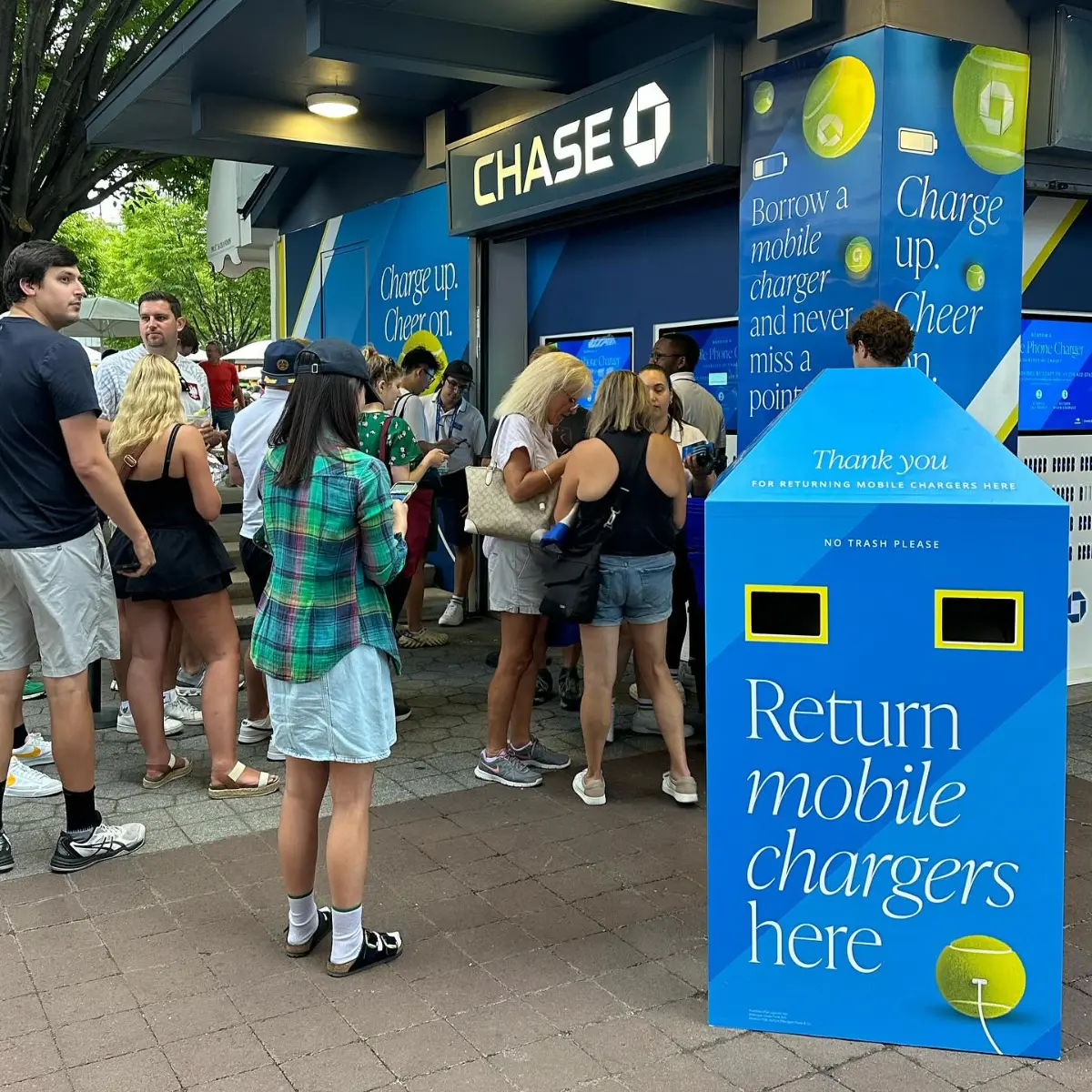
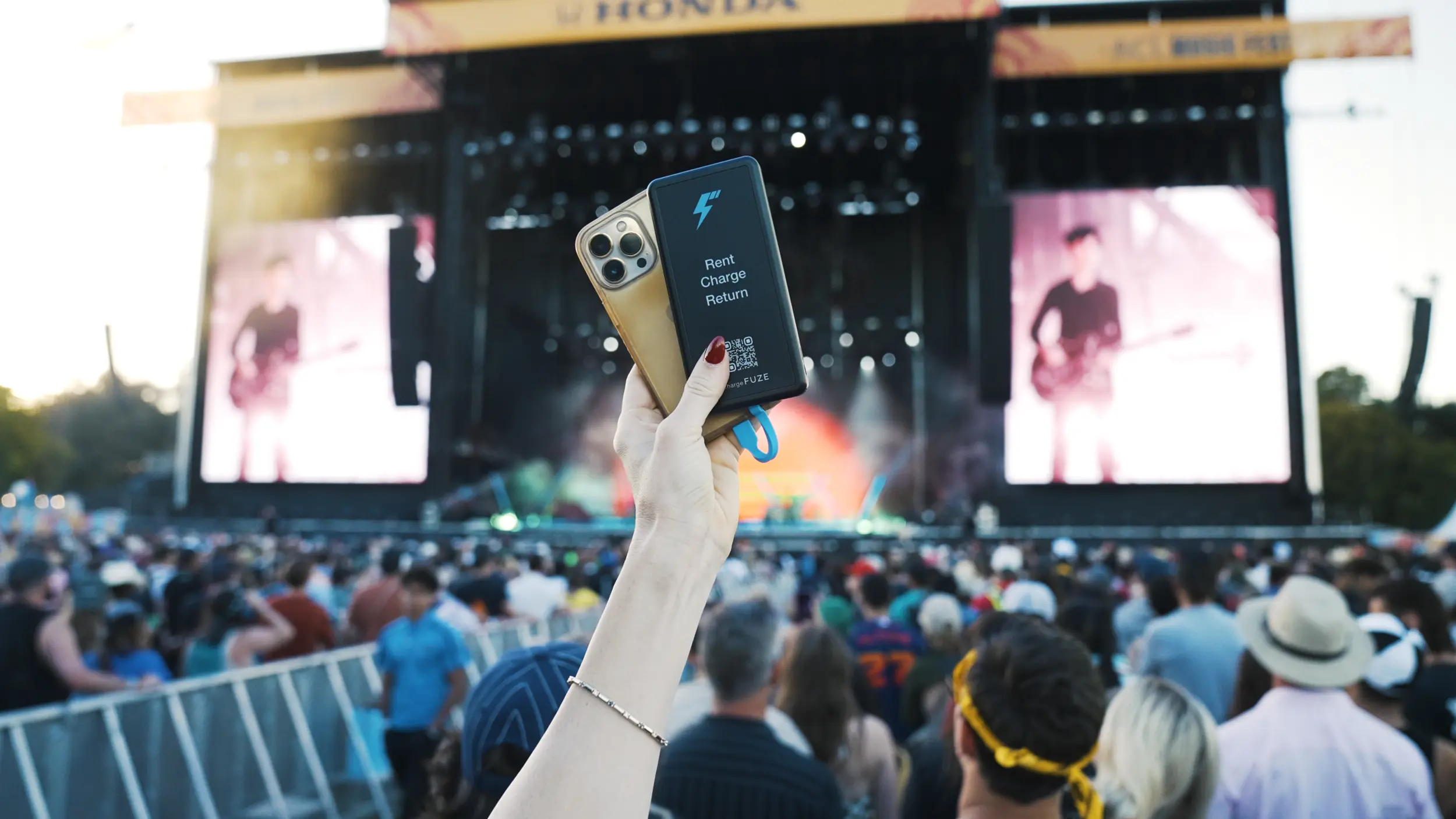
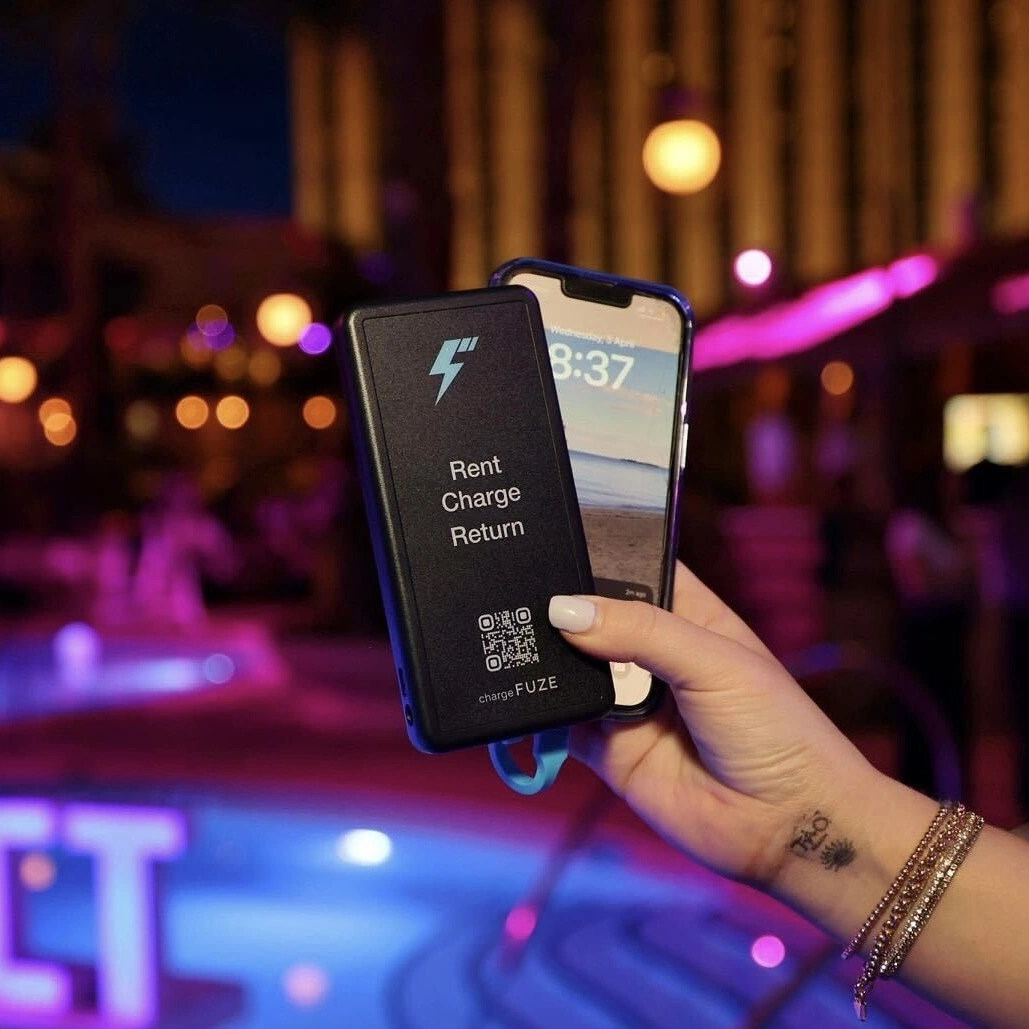
A phone charging station business rents portable power banks to people away from an outlet. A guest scans a QR code at the kiosk, takes a charged power bank, keeps moving, and returns it to any station in the network. The demand is not in question: about nine in ten U.S. adults (91%) own a smartphone, according to the Pew Research Center.
Revenue comes from three places.
- Rental fees Guests pay per rental. Pricing is set per venue as a time-based or flat rate.
- Screen advertising Kiosks with screens carry direct, programmatic and sponsored ads.
- Venue partnerships Venues host kiosks as an amenity that keeps guests longer and spending more.
91% of U.S. adults own a smartphone (Pew Research Center)
That is why the model shows up on lists of passive income business ideas. chargeFUZE's distributor page describes it as a way to "Generate Passive and Recurring Revenues," with "Regular passive income," a "Recurring revenue model" and "No cap on earnings potential." Read that as how the model is designed, not as a promise. chargeFUZE's own blog is blunt that "the economics work, but not automatically," and that the operators who earn treat it "like a real business, not a vending machine side hustle."
For industry ranges and the caveats that come with them, see our breakdown of what distributors actually earn.
7 steps to launch
Step 1: Choose your kiosks & hardware
Start with the hardware, because it sets your costs, your guest experience and the venues you can win. Search for a phone charging kiosk for sale and you will find three broad formats: rental kiosks that dispense portable power banks, charging lockers, and fixed wall or tabletop stations. For a rental business, the portable kiosk is the one that earns. The guest takes the charge with them, and the slot frees up for the next guest.
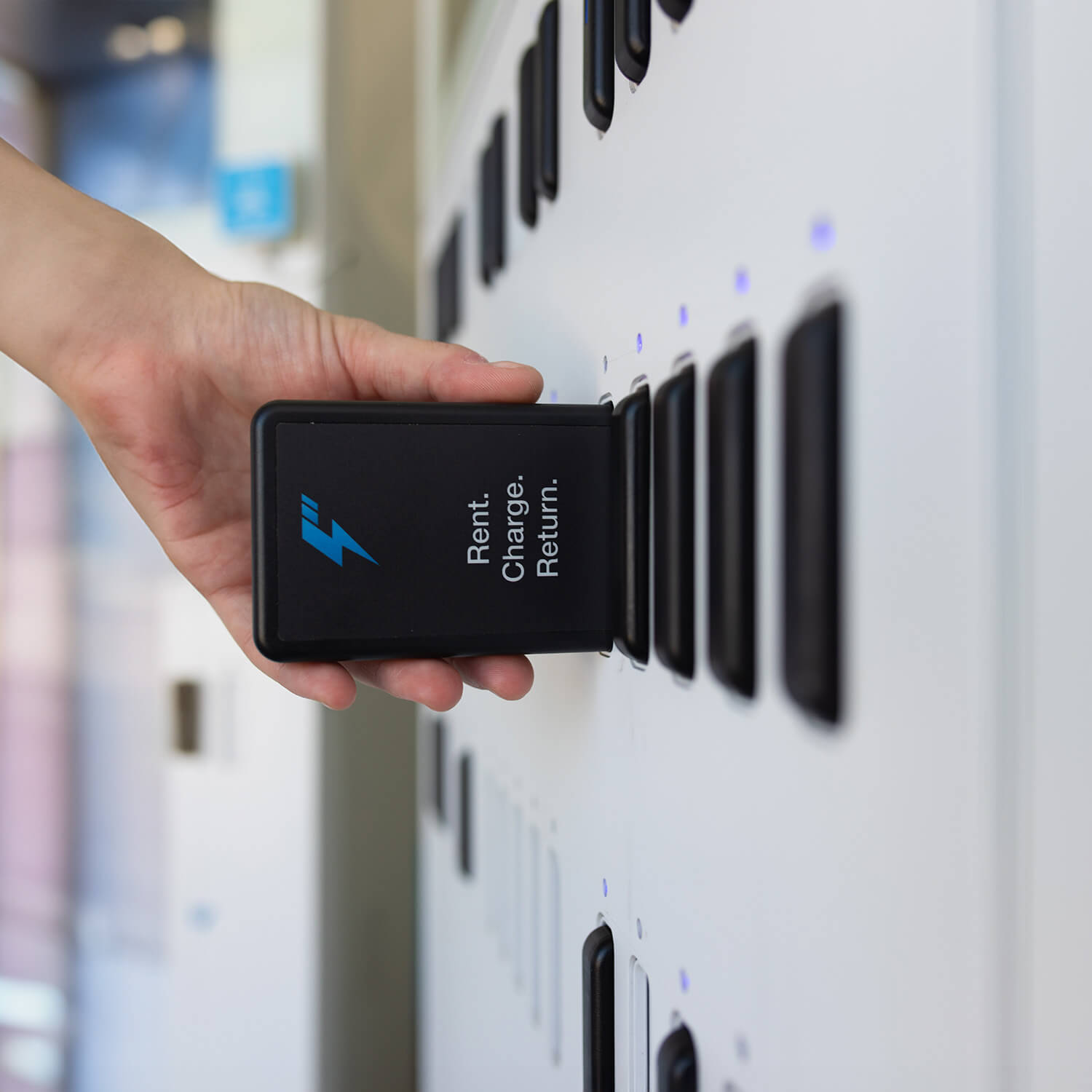
A commercial phone charging station in a public venue has to survive heavy use, so judge it on more than the sticker. chargeFUZE's fleet, for example, runs from countertop units to freestanding towers holding 15 to 100 portable chargers for business placements. Every power bank carries built-in Lightning, USB-C and Micro-USB cables, and every station supports remote network management and data tracking.
What to check
- Built-in cables that cover iPhone, Android and older devices
- A screen you can sell ads on, not just a static wrap
- Remote monitoring, so you see a fault before the venue does
- Who repairs or replaces a unit, and how fast
Step 2: Budget your start-up costs
If you have read up on how to start a vending machine business, the budget will look familiar: equipment, a commission to the location owner, insurance and servicing. NerdWallet puts used vending machines at $1,200 to $3,000 and new ones at $3,000 to $10,000, with location commissions of 5% to 25% of revenue. A kiosk budget has the same shape as a vending machine business, with two differences. There is no product to buy and restock, but power banks wear out and some walk away. And a screen can add an ad revenue line that most vending machines never have.
Split the budget the way the SBA business plan guide does: one-time costs to open and monthly costs to run. The SBA advises counting "at least one year of monthly expenses, but counting five years is ideal," and adding "a little extra, say 10%," to your break-even analysis for costs you cannot predict.
Cost line | Type | What to ask the seller
Kiosks and power banks | One-time | An itemized price per unit, plus warranty and replacement terms
Shipping, install and setup | One-time | What is included, and whether the venue needs any electrical work
Business setup | One-time | Entity, licenses, and venue contracts reviewed by a lawyer
Insurance | Monthly | Theft, damage and liability cover; venues may ask for proof
Platform and payments | Monthly | Which platform, connectivity and processing fees are bundled
Power bank wear and loss | Monthly | A buffer for units that degrade or never come back
Servicing and travel | Monthly | Who restocks, redistributes and repairs, and at what cost
Venue share or placement fee | Monthly | How the venue earns, and whether its share can rise
chargeFUZE's revenue guide suggests building a 5% to 10% annual loss buffer for power banks into the model. Leave the price cells blank until a seller fills them in writing.
Step 3: Join a distribution program or go independent
This is the biggest decision in a phone charging kiosk business. Going independent means you source the hardware, license or build the rental app, process payments, answer guests at 2 a.m. and sell your own screen ads. A distribution program hands much of that to the network, so your job narrows to the part that grows a kiosk business: winning and keeping venues.
Task | Distribution program | Going independent
Hardware | Supplied by the network | You find and vet a manufacturer
Rental app | The network's app and platform | You license or build one
Guest support | The network's support line | You answer every call and text
Screen ads | The network's ad sales | You sell to local advertisers
Usage data | The network's dashboard | Whatever your vendor provides
Control | Program terms apply | Full control and full risk
The chargeFUZE distributor program is built on the network model. Its distributor page lists "Dedicated business support and 24/7 guest support," a dashboard with "comprehensive usage data, supported by a dedicated customer success team," and direct and programmatic DOOH ad opportunities. chargeFUZE's blog adds that partners earn from both rental and advertising revenue, "with the brand handling much of the venue relationship infrastructure."
Whichever route you choose, vet a distribution program first. chargeFUZE's own checklist names five red flags: guaranteed income claims without documentation, no distributor references, vague territory protection, high upfront costs with thin support, and no exit terms. Get the revenue split, territory, support duties and exit terms in writing. If a seller promises to find locations for equipment you pay for, the FTC's Business Opportunity Rule (16 CFR Part 437) may require it to give you a written disclosure document at least seven calendar days before you sign or pay, so ask whether the rule applies.
Step 4: Secure high-traffic venue locations
Placement decides more of your results than any other choice, so this is the step to get right when you work out how to start a kiosk business. Strong venues share three traits: steady foot traffic, long dwell time and a real need to stay charged. Airports, stadiums, convention centers, hospitals, malls, hotels and nightlife venues all fit.
Inside the venue, put the kiosk where people pause, such as seating areas, concession lines, bar rails and lobbies, and keep it out of walkways and exits. Our guide to the best locations for charger kiosks walks through a five-step site check.
Then pitch the venue's world, not your hardware. Lead with a problem the owner already sees, like guests leaving early, and explain the setup: a small footprint, self-serve rentals and support handled by the network. Offer a pilot, and ask for a trial period so either side can exit if the placement is wrong.
Before you sign
- Walk the venue at peak hours
- Name the exact spot in the agreement
- Agree a trial period and a clear exit
- Write down how the venue earns
Start small and close together. A few kiosks in strong venues near each other are cheaper to service and easier to sell ads on than a scattered route.
Step 5: Set up the app, payments & support
A power bank rental business lives or dies in the moments after a guest scans. On chargeFUZE stations, a guest rents by scanning the QR code, using the POS terminal or following the on-screen instructions. They return the charger to any chargeFUZE station and get an SMS confirmation with their total.
Pricing is set per venue. chargeFUZE supports time-based and flat rates, places a pre-authorization hold on the card at the start of a rental to verify payment, and can add fees when a charger comes back late.
Support is where independent operators struggle most. Guests reach out when a charger will not eject or a return does not register. chargeFUZE offers 24/7 support by text at +1 (213) 928-7320, listed on station screens, so neither you nor the venue staff fields those calls.
Launch checklist
- Test the rental flow on iPhone and Android
- Set pricing per venue, in writing
- Show the support number on every screen
- Agree a policy for late and lost units
Step 6: Sell ads on your kiosks to speed up payback
A phone charging station kiosk with a screen is also a digital out-of-home (DOOH) ad placement, in front of people who are standing still with a phone in hand. chargeFUZE's distributor page frames it plainly: "Leverage Ads to Reduce Payback Period," using direct and programmatic DOOH ad opportunities and customizable ad spaces to recover your initial investment faster.
Through adFUZE, chargeFUZE's advertising arm, brands buy three ways: direct campaigns, programmatic ads, and sponsorships that tie a brand to "a complimentary, valued service." The PGA's Nick Schling credited the kiosks with "great exposure for sponsors through the interactive video screens."
Treat ad revenue as an accelerator, not a guarantee. It depends on your venues, your screens and how many ad slots actually sell, so build your plan on rentals first and count ads as upside.
Step 7: Track usage & grow your route
Once kiosks are live, the data tells you what to do next. Watch rentals per kiosk, peak hours and return patterns in your dashboard, and treat a weak kiosk as a placement problem before you call it a demand problem. chargeFUZE's placement guide notes that moving a kiosk 50 feet can dramatically change how often it gets used.
Grow in this order: fix weak placements, add units where kiosks run out, then add venues near the ones you already service. "Build the operational backbone before you add volume," as chargeFUZE's distributor guide puts it. The classic failure looks like success at first: strong early results, a big hardware order, then a route you cannot keep up with. Read the mistakes new kiosk business owners make before you scale.
Every week
- Review rentals per kiosk
- Move underperformers before you pull them
- Add venues close to your current route
- Ask happy venues for referrals
Sources
- Pew Research Center, Mobile Fact Sheet
- U.S. Small Business Administration, Write your business plan
- NerdWallet, How to Start a Vending Machine Business
- FTC Business Opportunity Rule, 16 CFR Part 437
- chargeFUZE Distributors, FAQs, Events and Businesses pages, and adFUZE
Phone charging kiosk business questions
How much does it cost to start a phone charging kiosk business?
It depends on your kiosk count, your route to market and your venue terms. Budget the one-time costs (kiosks, power banks, install and business setup) and at least a year of monthly costs (insurance, software, servicing, replacement units and the venue share), then add about 10% for surprises, as the SBA suggests. chargeFUZE builds a custom plan and pricing for each partner, so ask Sales for an itemized quote for your market.
Do you need a venue before you buy kiosks?
You do not need a signed venue to start talking to a program, but line up venue interest before you commit to hardware. A kiosk sitting in storage earns nothing. Shortlist venues, walk them at peak hours, and have a host ready to pilot before your first order arrives.
Is a charging kiosk business passive income?
Semi-passive at best. chargeFUZE describes its distributor model as regular passive income with low maintenance, and the network carries guest support. But a cell phone charging kiosk business still needs venue sales, placement reviews and servicing. chargeFUZE's own program guide notes that kiosk and vending operators commonly spend 4 to 10 hours per week on operations, even at a modest scale.
Keep reading
All articles