
Text +1 (213) 928-7320
Let's chat!

How To Evaluate a Phone Charger Kiosk Distribution Program Before You Sign
With the global cell phone charging station market projected to grow at a compound annual growth rate above 15% through 2033, the opportunity is real. Battery anxiety alone ensures persistent consumer demand. But a growing market doesn't guarantee that every distribution program within it is worth your capital. The phone charger kiosk space is still maturing, and distribution agreements vary wildly in how they split revenue, allocate risk, define territory, and handle the operational realities that determine whether you actually make money. This guide provides an evaluation framework so you can make a clear-eyed decision before signing anything.
Why the Phone Charger Kiosk Market Is Attracting Distributors Right Now
Several converging forces are creating genuine market pull, and understanding them helps you separate structural tailwinds from hype. Smartphone dependency keeps deepening. The average user now charges their device 1.4 times per day, and Generation Z starts experiencing charging anxiety when battery levels hit just 44%. That behavioral reality means venues, such as bars, airports, stadiums, and hospitals, face increasing pressure to offer charging as a baseline amenity, not a nice-to-have. The business model has matured beyond simple pay-per-charge transactions. Modern kiosk operators generate revenue through multiple streams: rental fees from consumers, Digital Out-of-Home (DOOH) advertising displayed on kiosk screens, and venue partnership fees. The DOOH component is particularly significant. OOH advertising revenue hit a record $1.98 billion in Q1 2025, with digital formats growing 9.2% year-over-year. A kiosk that doubles as a digital ad display fundamentally changes the unit economics.

Venue operators now actively seek charging solutions rather than treating them as afterthoughts. Over 70% of consumers prefer venues that offer charging stations. For a restaurant or retail store, a charging kiosk is a tool that increases dwell time and, by extension, spend per visit. These dynamics create a legitimate opportunity. But they also create fertile ground for programs that oversell the upside and understate the operational commitment required to capture it.
Deconstructing the Revenue Model: What You Actually Keep
Rental Revenue Splits
Most distribution programs structure a revenue share between the distributor (you), the program operator (the brand), and sometimes the venue host. These splits vary enormously. Some programs advertise that distributors receive the majority of rental revenue, but the operative question is what percentage of gross rental revenue you retain after the brand's platform fees, payment processing charges, and any required revenue share with venue partners
Advertising Revenue
Programs that incorporate DOOH advertising on kiosk screens often present advertising revenue as a significant income stream. Given the broader DOOH market's growth, with the global DOOH market at $20.17 billion in 2025, the potential is real. But your share depends on several factors: whether the program controls ad sales or outsources them, the fill rate (percentage of available ad slots that are actually sold), and how the ad revenue split works among you, the brand, and the venue.
Venue Economics
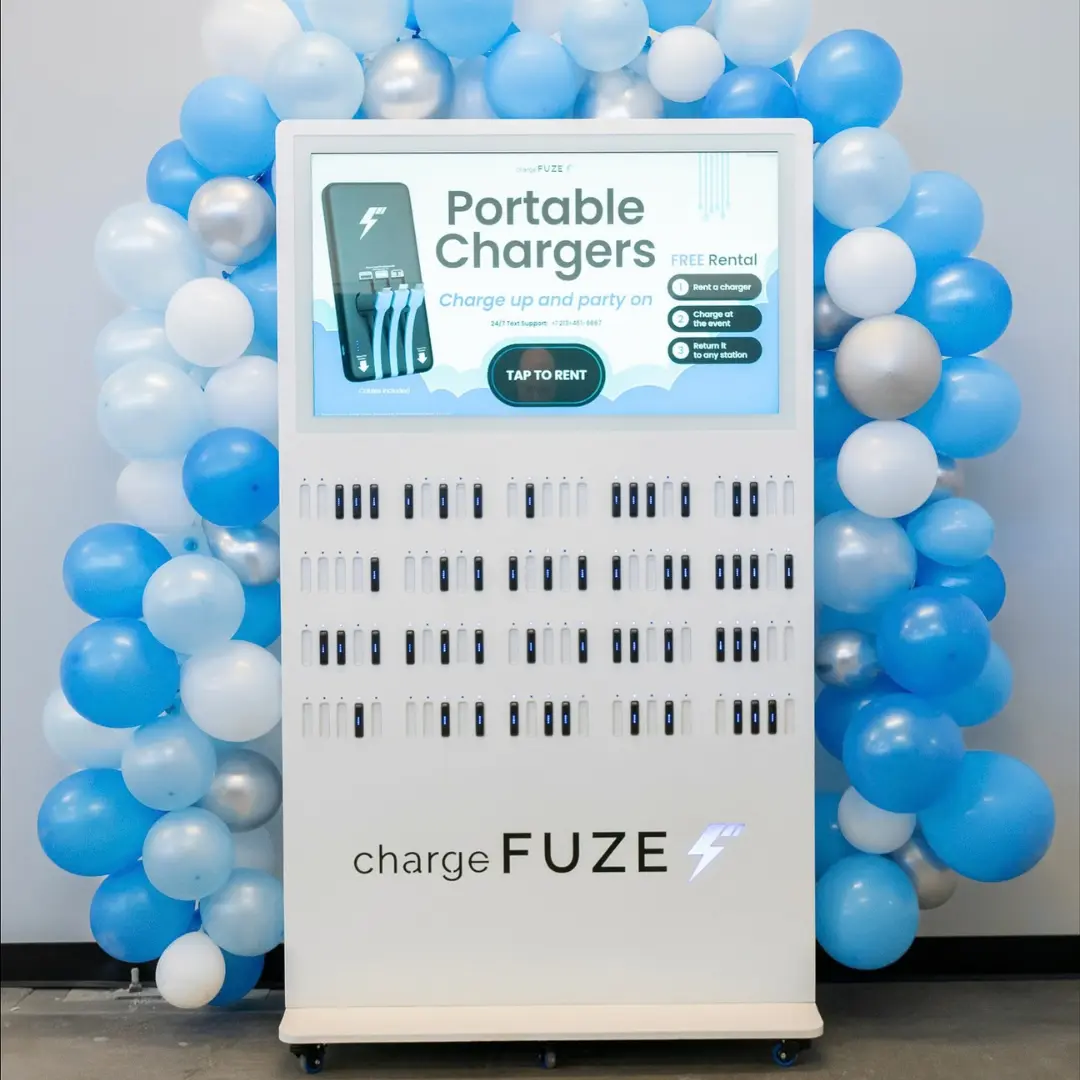
Some programs require distributors to pay venues a monthly placement fee or revenue share to host the kiosk. Others position the kiosk as a free amenity for the venue and handle placement agreements centrally. The difference can be hundreds of dollars per kiosk per month in your operating costs. Companies like chargeFUZE structure their distributor program to let partners earn from both rental and advertising revenue, with the brand handling much of the venue relationship infrastructure. Such a kind of centralized venue management can significantly reduce the operational burden on individual distributors, but you should still understand exactly how venue agreements affect your net revenue.
Total Cost of Ownership: The Number That Actually Matters
Upfront Hardware and Deployment Costs
Kiosk hardware prices vary based on unit capacity, screen size, and build quality. But the purchase price doesn't include shipping, installation, any required electrical work at the venue, or connectivity setup. Ask the program to itemize all costs required to get a kiosk from the warehouse to a venue and make it fully operational.
Ongoing Operational Costs
Long-term profitability depends on understanding and managing the ongoing operational costs that keep kiosks running smoothly and reliably. Below are several core operational cost categories that kiosk operators should expect to manage on a day-to-day basis:
- Connectivity and Data Service Fees: Monthly data plans or connectivity subscriptions are a standard operational expense. Reliable connectivity is critical because an offline kiosk cannot process transactions, resulting in lost revenue and potential frustration for venue partners. Operators should choose dependable network providers and budget for consistent service to ensure the kiosk remains fully functional throughout operating hours and can handle payment processing without interruption.
- Payment Processing and Platform Costs: Every transaction processed through a kiosk typically incurs a payment processing fee charged by the payment gateway or merchant services provider. These fees are usually a percentage of each sale plus a small fixed transaction charge. In addition, many kiosk systems rely on software platforms that provide remote monitoring, analytics dashboards, and content management tools. These platforms may require monthly licensing or subscription fees. Some kiosk providers bundle processing and software costs into a single platform fee, while others structure them as separate operational expenses.
- Maintenance, Replacement, and Insurance: Physical wear and tear is inevitable in self-service environments where devices are used frequently by the public. Charging cables, device mounts, and connectors may need periodic replacement to maintain reliability. Preventive maintenance programs help reduce downtime and extend equipment life, which is why many operators schedule routine servicing. Insurance coverage is another important cost, protecting against theft, vandalism, or accidental damage. Budgeting for maintenance and replacement ensures kiosks remain operational and avoids costly disruptions that could harm revenue and venue relationships.
Understanding these ongoing operational costs helps kiosk operators maintain stable performance and predictable financial planning.
Replacement and Depreciation
Kiosks are physical assets subject to wear, vandalism, and technological obsolescence. Ask the program: What is the expected useful life of the hardware? What happens when a kiosk needs replacement — do you bear the full cost, or is there a warranty or replacement program? What is the typical annual depreciation schedule? Annual TCO for commercial kiosks commonly falls in the $5,000 to $15,000 range per unit. Use that as a sanity check against whatever the program's projections assume.
Territory Rights and Exclusivity: Protecting Your Investment
Questions to Ask About Territory
Does the agreement grant you exclusive rights within a defined geographic area? How is that area defined — by zip code, city, county, or radius? What happens if another distributor places kiosks in venues you've been developing relationships with? Can the program itself place company-owned kiosks in your territory?
Saturation Risk
The phone charger kiosk model depends on having enough kiosks in a geographic area to build consumer awareness without over-saturating venues to the point where per-kiosk utilization drops below profitability. This is particularly important in urban markets where multiple charging kiosk brands may already operate. If the program doesn't offer territory exclusivity, you're essentially building a business on rented ground.
The Legal Structure: Distribution Agreement vs. Franchise
The FTC's Franchise Rule, codified at 16 CFR Part 436, requires franchisors to provide a Franchise Disclosure Document (FDD) containing 23 specific items of information, including litigation history, financial performance data, and a complete list of current and former franchisees, at least 14 calendar days before you sign any binding agreement or make any payment. Thirteen states additionally require franchise registration before a franchisor can sell within their borders.
Three elements trigger the Franchise Rule: the franchisee pays the franchisor (or an affiliate) a required fee, the franchisor exerts significant control over or provides significant assistance in the franchisee's business methods, and the franchisee operates under the franchisor's trademark
Many phone charger kiosk distribution programs are deliberately structured to avoid meeting all three criteria. They may call themselves "distribution partnerships" rather than franchises, avoid trademark licensing requirements, or structure fees to fall outside the FTC's definition. Legitimate businesses can legally operate as distribution programs rather than franchises. But it means you won't receive the standardized disclosures that franchise law requires. Without an FDD, you lose access to standardized financial performance representations, franchisor litigation history, and a verified list of current and former participants you could contact for candid feedback. You'll need to gather this information independently.
Operational Realities: What "Passive Income" Actually Looks Like
Venue Acquisition and Relationship Management
Unless the program places kiosks in venues on your behalf, you'll be responsible for pitching venue owners, negotiating placement terms, and maintaining those relationships over time. This is sales work. It requires time and persistence, particularly in competitive markets where venues may already host a competing charging solution or have been pitched multiple times.
Even in programs where the brand handles initial venue placement, distributors often remain responsible for maintaining venue relationships, troubleshooting on-site issues, and replacing underperforming locations. Kiosk and vending businesses require consistent attention and hands-on management, with operators commonly spending 4 to 10 hours per week on operations even at a modest scale.
Logistics and Maintenance
Portable charger kiosks require regular cable inspections and replacements, software updates, cleaning, and occasional hardware repairs. The question is who handles this. Some programs provide a central support team that dispatches technicians, ohers leave maintenance to the distributor. The answer significantly affects both your time commitment and your ongoing costs.
Scaling Economics
The unit economics of phone charger kiosk distribution typically improve at scale. Your per-kiosk costs decrease as you spread fixed costs across more units, and your venue acquisition becomes more efficient as your local brand recognition grows. But this also means the early months, when you have a small number of kiosks and are still building venue relationships, are typically the most capital-intensive and lowest-revenue period.
Five Red Flags That Should Make You Walk Away
After evaluating the structural components, step back and assess the program holistically. Certain patterns reliably predict problematic distributor relationships.
- Guaranteed income claims without documentation. Any program that promises specific monthly revenue per kiosk without providing verifiable data from existing distributors is either reckless or dishonest. Legitimate programs will share network averages, top-performer ranges, and honest acknowledgments of underperforming units.
- Refusal to provide distributor references. If the program won't connect you with current distributors, you have no way to validate their claims. Walk away.
- Vague or nonexistent territory protections. If the agreement doesn't clearly define your territory and protect it against both other distributors and the company itself, your investment is perpetually at risk.
- High upfront costs with minimal ongoing support. Programs that front-load their revenue through hardware markups but provide thin operational support often treat distributors as customers rather than partners. The best programs earn as you earn, aligning their incentives with your success.
- No exit provisions. What happens if the business doesn't work out? Can you sell your kiosks and territory to another distributor? Can you return hardware within a window? A program confident in its model will address exit scenarios transparently.
The phone charger kiosk market is growing for real, structural reasons. Consumer demand for on-the-go charging is increasing, venues are actively seeking amenity solutions that drive dwell time and revenue, and the layered business model creates genuinely attractive unit economics at scale.
But growth markets attract both excellent operators and opportunistic ones. The distribution program you choose determines whether you're building an asset or buying an expensive lesson. Take the time. Do the math. Talk to existing distributors. And don't sign until the answers are in writing.
Sources:
- Business Research Insights — Cell Phone Charging Station Market Size, Share, Forecast
- PR Newswire — "Low Battery Anxiety" Grips 9 Out Of Ten People
- TechKV — Smartphone Statistics 2025: Battery Expectations & Consumer Preferences
- Dataintelo — Phone Charging Kiosk Market Research Report 2033
- OAAA — Out of Home Advertising Revenue Hits Record $1.98 Billion in Q1 2025
- Precedence Research — Digital Out-Of-Home Advertising Market Size, Report by 2034
- FTC — Franchise Rule Compliance Guide
- FTC — Franchise Fundamentals: Taking a Deep Dive into the Franchise Disclosure Document
- Elite Franchise Magazine — The Ultimate Franchise Due Diligence Checklist
- Kiosk Industry Group — Kiosk Price & Cost Analysis
- Kiosk Marketplace — Reliability and the Total Cost of Ownership
- Global Vending Group — Can Vending Machines Truly Be Passive Income?
- Verified Market Reports — Shared Power Bank Rental Service Market Size & Outlook 2033
