
Text +1 (213) 928-7320
Let's chat!

How To Choose the Best Locations for Phone Charger Kiosks: A Placement Guide
Ninety-three percent of Americans feel anxious when their smartphone battery drops low. Generation Z starts worrying at 44% battery life, millennials follow closely at 43%, and even Baby Boomers begin scanning for outlets once they hit 34%. This is "low battery anxiety," a measurable behavioral shift that changes how people move through, linger in, and spend money at physical venues. For businesses and venue operators evaluating phone charger kiosks, this anxiety represents a concrete opportunity. The difference between a charging kiosk that gets rented dozens of times a day and one that collects dust comes down to placement. This guide breaks down the specific metrics, venue types, and decision frameworks that separate high-performing kiosk locations from underperforming ones, so you can make placement decisions backed by data rather than guesswork.
Why Placement Outweighs Every Other Variable
Phone charging is an impulse-driven behavior. People rarely plan ahead to rent a portable charger. They notice their battery dropping, feel that spike of anxiety, and look for the nearest solution. If a kiosk isn't visible at the moment that anxiety peaks, it doesn't exist to that consumer. This means placement must align with three converging factors:
- Foot Traffic Volume - High foot traffic increases the number of potential users who will notice the kiosk during moments of battery anxiety. Locations with steady pedestrian movement expose the charger station to thousands of people daily. The more individuals who pass by, the greater the probability that someone nearby will have a low battery and act immediately. Even a small percentage of conversions can produce consistent usage when the total volume of passersby is large enough to sustain regular demand.
- Dwell Time - Dwell time refers to how long people remain in the immediate area around the kiosk. Locations where visitors stay for extended periods naturally increase the likelihood that someone will eventually need to recharge.
- Need Urgency - Urgency reflects how likely someone is to suddenly need power at a specific point in their journey.
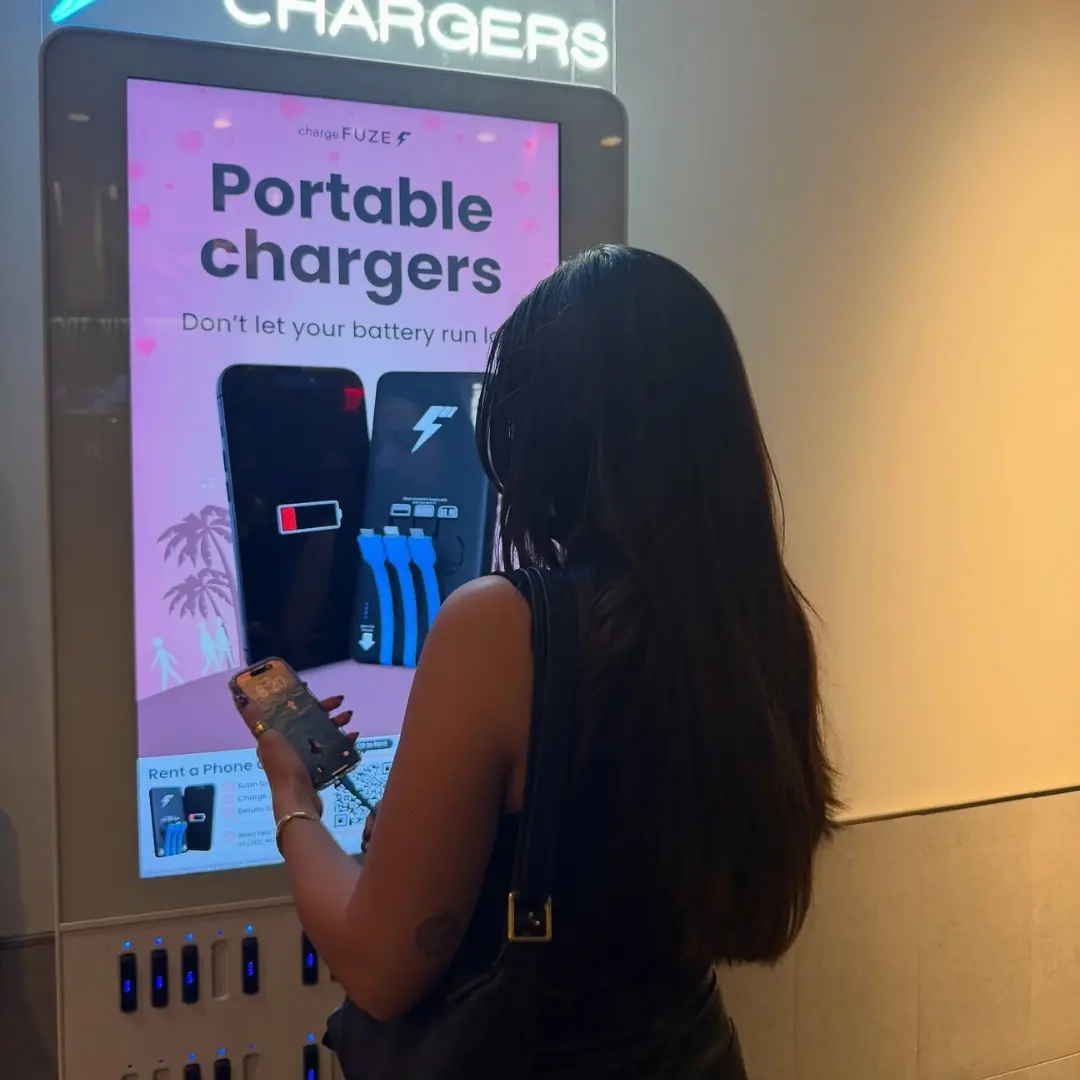
Providers like ChargeFUZE build their placement strategies around this exact convergence, working directly with venue partners to identify the highest-impact spots within each property rather than relying on one-size-fits-all positioning.
Venue-Type Analysis: Where Kiosks Perform Best
Airports and Transit Hubs
Airports are among the strongest environments for phone charger kiosks, and the data explains why. The average domestic air traveler spends more than 2 hours at the airport beyond the minimum required time. Passengers who report a positive airport experience spend 45% more on retail and services than dissatisfied passengers. Charging access directly contributes to that positive experience.
The best placement zones within airports are gate-adjacent seating areas (where dwell time is longest and battery anxiety peaks), food court perimeters (where travelers sit for 20–40 minutes), and baggage claim areas (where arriving passengers have often been offline during flights and need immediate charge). Avoid TSA security queues and main concourse walkways where travelers are moving too quickly to engage.
Shopping Malls and Retail Centers
With foot traffic rising nearly 10% across all mall types in 2025, retail environments offer increasing volume. The key is understanding where shoppers linger within a mall. Food courts remain the highest-dwell zone in most malls, followed by seating areas near anchor stores and entertainment sections like movie theaters or arcades. Slowing customers down inside a retail environment drives sales. A charging kiosk serves a dual purpose here, as it provides a reason for the shopper to pause while also generating revenue from usage. For mall operators, this makes kiosks a net-positive amenity even before factoring in rental revenue. Place kiosks near seating clusters rather than in foot-traffic corridors. A kiosk next to a bench outside a popular store will outperform one in the center of a walkway because the bench creates a natural stopping point where people check their phones and notice their battery level.
Hospitals and Medical Facilities
Healthcare settings are high-urgency environments that are often underexplored for kiosk placement. Patients and visitors face unpredictable, often lengthy wait times. A phone is frequently the primary source of entertainment, communication, and information (checking test results, messaging family members, reading while waiting). Emergency room waiting areas, outpatient clinic lobbies, and hospital cafeterias are the strongest placement zones. These combine extended dwell times (often two-plus hours in ERs) with high emotional need for connectivity. The urgency factor is heightened because healthcare workers are often stressed and rely on their phones for comfort and communication.
Stadiums, Arenas, and Event Venues
Large-scale event venues present a unique dynamic: massive foot traffic concentrated into a few hours, with extremely high phone usage rates. Attendees are filming videos, taking photos, sharing on social media, using mobile tickets, and ordering concessions via the app, all of which are battery-intensive activities.
The challenge is that stadium environments are chaotic. Kiosks must be placed where attendees naturally congregate, with enough time to initiate and complete a rental. Concourse areas near concession stands are ideal. Fans queueing for food have two to ten minutes of idle time and are already stationary. Main entrance plazas (pre-event), premium lounge areas, and designated fan zones also perform well. Avoid placing kiosks inside seating bowl areas or in narrow access tunnels where crowding and movement make it impractical to stop, browse, and rent.
Bars, Nightclubs, and Entertainment Venues
Nightlife venues combine long dwell times (two to four hours is typical) with heavy phone usage — ride-share coordination, photo sharing, social media posting, and mobile payment. Battery depletion is nearly universal among patrons by the end of a night out.
The highest-performing spots in these venues are near the bar itself (where people wait for drinks and instinctively check their phones), near the entrance or coat check (a natural pause point), and in lounge or seating areas. Restroom corridors can also work well in larger nightlife venues, as they see steady foot traffic throughout the night and provide a brief moment of pause.
Hotels and Conference Centers
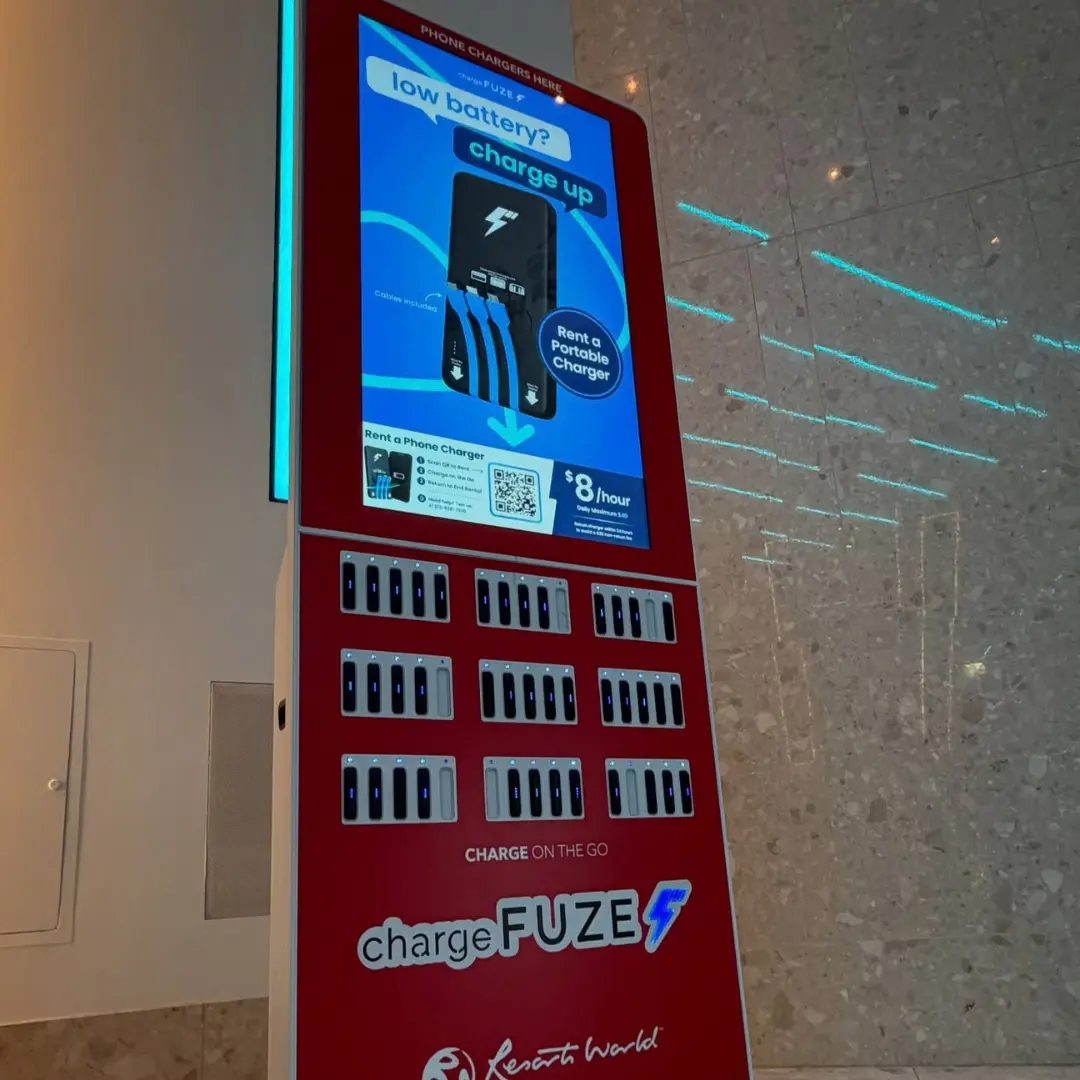
Hotels offer a dual audience: overnight guests who may need a charge in common areas (lobby, pool, fitness center) and conference or event attendees who spend entire days on-site. Conference centers are particularly strong because attendees use phones to take notes, network on LinkedIn, and check schedules. Lobby areas near check-in, conference registration desks, and breakout session hallways are the priority placements. For hotels with restaurants, placing a kiosk in the dining area captures guests who sit down for 30–60 minutes and notice their battery during the meal.
Unlocking the Advertising Revenue Layer
Phone charger kiosks with digital screens open a secondary revenue stream that many operators undervalue. Forty-three percent of new commercial charging stations now combine media panels with branding opportunities, and 37% of retail venues and event organizers actively use these screens for targeted promotions. The economics are compelling. Digital out-of-home (DOOH) advertising CPM rates range from $2 to $15, depending on the venue type and audience, with programmatic DOOH averaging $7.24 per thousand impressions. A well-placed kiosk in a high-traffic venue can generate thousands of daily impressions.
What makes kiosk advertising particularly effective is the captive audience dynamic. Unlike a billboard that someone drives past in two seconds, a person actively renting a charger is standing in front of the screen for 15–30 seconds during the rental process. That engagement time makes the impressions significantly more valuable than standard DOOH placements. For venue operators, this means the revenue calculation for a kiosk placement should include both rental and advertising revenue. A kiosk in a premium lobby location might justify a higher revenue-share with the venue because the advertising CPMs in that environment are substantially higher than in a back hallway.
How To Evaluate a Location Before Committing
Step 1: Quantify the Foot Traffic
Use venue-provided data, third-party foot traffic analytics tools, or manual counting during peak hours. You need at a minimum the daily average visitors to the venue, the hourly peak traffic windows, and the percentage of visitors who pass the specific proposed kiosk location. For context, a busy Walmart location sees roughly 161,000 visitors per month. A mid-tier restaurant might see 5,000. Shopping malls in healthy trade areas see tens of thousands daily. Match your expectations to the venue category and don't assume a venue is high-traffic simply because it feels busy.
Step 2: Map the Dwell Zones
Walk the venue during peak hours. Identify where people stop, sit, wait, and linger. These are your candidate placement spots. Common dwell zones include seating areas, queuing lines, food and beverage areas, waiting rooms, and lobby or reception areas. Overlay the foot traffic data with these dwell zones. The intersection is where kiosks belong.
Step 3: Assess the Demographic and Urgency Fit
Consider the typical visitor profile. Younger audiences (under 40) experience battery anxiety earlier and are more likely to rent a portable charger. Venues that attract tech-savvy, socially active demographics will see higher conversion rates. Also, assess the typical visit duration. If the average visit is under 30 minutes, urgency will be lower. If visitors typically spend two or more hours on-site, a significant percentage will need a charge during their visit.
Step 4: Check the Competition and Alternatives
Survey the venue for existing charging solutions. Are there free wall outlets accessible to the public? Are competing kiosk providers already installed? Built-in wireless charging at tables? Each of these reduces the urgency for your kiosk. The ideal location has a high need and limited existing solutions.
Step 5: Negotiate Placement, Not Just Access
Getting into a venue is only half the battle. Where within the venue the kiosk sits will determine its performance. Negotiate for specific high-traffic, high-dwell placement zones rather than accepting whatever spot the venue offers. Bring your foot-traffic and dwell-time analysis to the negotiation, as data gives you leverage to request premium placements.
The best operators treat placement as an ongoing experiment rather than a set-it-and-forget-it decision. Usage data from the kiosks themselves provides a feedback loop that should inform repositioning decisions. If a kiosk is underperforming, the first question should be whether it's a placement problem, not a demand problem. Moving a kiosk 50 feet can dramatically change its utilization rate.
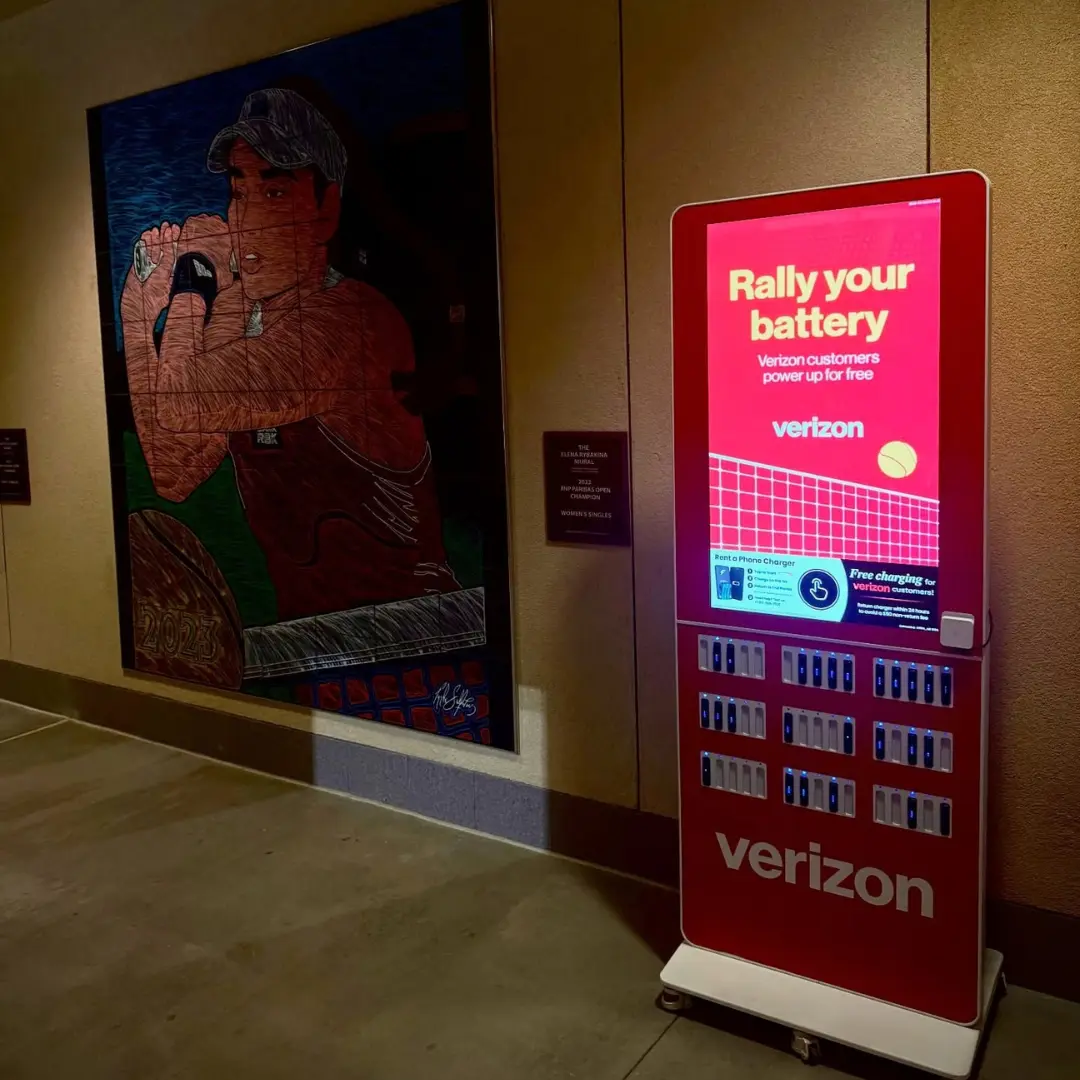
Seasonal patterns matter too. A kiosk in a university student center will see heavy usage during the academic year and minimal usage during breaks. Outdoor venue placements peak in summer. Airport traffic fluctuates around holidays. Factor these cycles into your placement strategy and consider whether a given location justifies a permanent installation or a seasonal rotation.
The shared power bank industry is growing fast, projected to more than double from $1.56 billion in 2025 to $4.23 billion by 2032. But market growth doesn't automatically translate into revenue for every operator. The operators who win will be the ones who treat placement as a science: measuring foot traffic, mapping dwell zones, analyzing urgency patterns, and continuously optimizing based on real usage data. The best location for a phone charger kiosk is never the most obvious one. It's the one where high foot traffic, extended dwell time, and acute battery need converge in a single spot, and where the kiosk is visible at the exact moment a visitor glances at their phone and feels that familiar pang of low-battery anxiety.
Sources:
- PR Newswire — "Low Battery Anxiety" Grips 9 Out of Ten People
- TechKV — Smartphone Statistics 2025: Battery Expectations & Consumer Preferences
- Coherent Market Insights — Shared Power Bank Market Size, Share and Analysis, 2025-2032
- Growth Factor AI — Mall Foot Traffic Data Guide: 2025 Trends, Statistics & Analysis Tools
- Inside Retail — Why Slowing Down in Stores Can Drive Big Sales: The Science Behind Dwell Time
- Retail Sensing — Retail Dwell Time: The Route to Higher Spending
- ScienceDirect — Shopping or Dining? On Passenger Dwell Time and Non-Aeronautical Revenues (Journal of Air Transport Management, 2024)
- Ariadne — People Counting & Footfall Analytics Complete Guide
- SafeGraph — Foot Traffic Data Guide
- Archive Market Research — Cell Phone Charging Station 2025 Trends and Forecasts 2033
- StackAdapt — DOOH Advertising Costs: Making the Case for Budget
- Cornell University / arXiv — Quantifying Low-Battery Anxiety of Mobile Users
