
Text +1 (213) 928-7320
Let's chat!

Why Most Phone Charger Kiosk Distributors Fail: 7 Mistakes To Avoid
The phone charging kiosk market is booming. The global cell phone charging station market was valued at roughly $500 million in 2024 and is projected to reach $1.8 billion by 2033, growing at a compound annual rate above 15%. That kind of trajectory draws entrepreneurs and distributors like a magnet. Ninety-three percent of Americans report experiencing anxiety when their phone battery drops low. The demand is real, visceral, and only intensifying as smartphone dependency deepens. The gap between "the market is growing" and "my distribution business is profitable" is enormous. A growing market doesn't hand you revenue. It hands you an opportunity to compete, and most new distributors lose that competition because they repeat the same avoidable mistakes. This post breaks down the seven most common failures that sink phone charger kiosk distribution businesses.
Treating Location Selection as a Checkbox Instead of a Strategy
Most new phone charger kiosk distributors approach site selection with alarming casualness, choosing venues simply because they're convenient or "it's a busy area." A shopping mall food court might see 10,000 visitors a day, but if your kiosk is tucked behind a pillar near the restrooms, your effective visibility drops to a fraction of that traffic. Foot traffic volume alone doesn't predict performance. Placement within the venue and alignment between your product and the audience's behavior matter just as much.
What Smart Distributors Do Differently
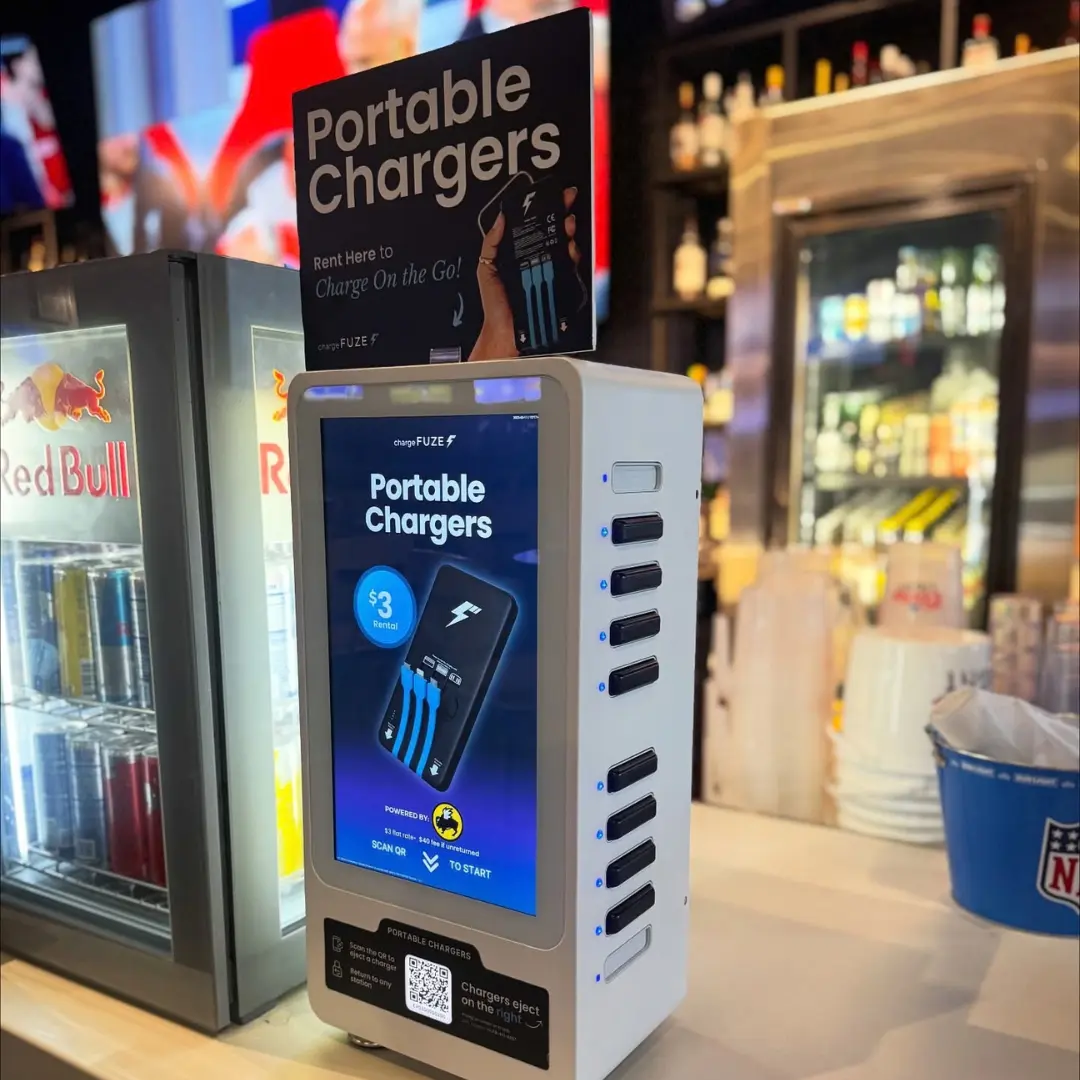
High-performing distributors treat site selection like a real estate investment. They analyze foot traffic patterns, dwell time, and demographic alignment before signing a single venue agreement. The venues that generate the strongest returns for phone charging kiosks share specific characteristics:
- Captive audiences who can't easily leave: High-performing distributors prioritize venues where visitors cannot easily leave once they arrive. Airports, stadiums, concert halls, large event venues, and transportation terminals create this dynamic naturally. When people are committed to staying in a location for a specific period, their phones continue to drain without convenient charging options. This increases both the visibility and the usefulness of a kiosk. Captive environments also create recurring demand during long events or waiting periods, making them among the most reliable revenue-generating placements for charging networks.
- High smartphone usage demographics: The most profitable locations attract visitors who rely heavily on their phones throughout their visit. Younger adults, urban professionals, travelers, and event attendees tend to use smartphones constantly for messaging, social media, navigation, ticketing, and photography. These usage patterns accelerate battery drain and increase the likelihood that someone will need a charger during their time at the venue. Smart distributors intentionally target environments where digital interaction is part of the experience, ensuring the kiosk serves a real, frequent need rather than an occasional convenience.
- Natural wait times: Waiting time is one of the strongest predictors of charger rental demand. Airports before boarding, restaurants with long waitlists, entertainment venues between acts, and nightlife districts with entry lines all create natural pauses where people check their phones and notice low battery levels. These moments of idle time increase kiosk visibility and encourage action.
Companies like ChargeFUZE have built their network around this principle, placing kiosks in high-density venues such as Madison Square Garden, major shopping centers, and hospitality hotspots where dwell time and charging demand naturally intersect. The distributors who fail tend to optimize for easy conversations rather than having the harder conversations with high-value venue operators who will scrutinize your value proposition.
Ignoring Unit Economics Until It's Too Late
Real-world operating costs for phone charger kiosk distributors include:
- Hardware Procurement and Depreciation: Every kiosk requires an upfront capital investment, which must be recovered over time. Hardware procurement includes the kiosk itself, the charging docks, and the portable power banks used by customers. Over time, equipment experiences wear, cosmetic damage, and technological obsolescence. Depreciation becomes an unavoidable factor in unit economics. If operators underestimate the hardware's lifespan or fail to account for replacement timelines, the cost of maintaining a functioning network can quickly exceed the revenue generated from rentals.
- Venue Revenue-Share Agreements: Many high-traffic venues require a share of revenue in exchange for allowing kiosk placement. These agreements are common in bars, shopping centers, entertainment venues, and transportation hubs. While the percentage may seem manageable initially, revenue-sharing directly reduces per-transaction margins. A location generating strong usage may still d: eliver limited profit if the venue’s share is substantial.
- Power Bank Replacement Cycles: Portable chargers degrade over time as lithium batteries lose their ability to hold a full charge. Heavy use accelerates this process, requiring power banks to be replaced regularly to maintain a reliable customer experience. Operators who ignore replacement cycles risk offering underperforming chargers that frustrate users and reduce repeat rentals. Replacement planning should include both battery degradation and the inevitable loss of units. Factoring these recurring replacement costs into the economic model prevents unpleasant surprises as the network grows.
- Connectivity and Software Platform Fees: These systems typically require ongoing subscription fees, data connectivity costs, and payment processing integrations. While each fee may appear relatively small, they add up quickly when multiplied across dozens or hundreds of kiosks.
- Transportation and Network Servicing: A distributed network of kiosks requires regular servicing to restock power banks, resolve technical issues, and maintain equipment quality. This servicing introduces transportation expenses, labor costs, and logistical planning requirements. Even in densely populated areas, the time and fuel required to visit multiple locations can become substantial. Efficient routing and service schedules are critical for controlling these costs.
- Insurance and Liability Coverage: Physical devices placed in public venues carry inherent risk. Charging kiosks must be insured against theft, vandalism, property damage, and potential liability claims related to device malfunctions. Venue operators often require proof of insurance before approving installation. While insurance premiums may seem like a minor administrative expense, they represent an important component of operational stability. Proper coverage protects both the operator and the venue partner, ensuring that unexpected incidents do not result in financial setbacks that undermine the network's sustainability.
Portable charger rental businesses can require significant upfront capital, and typically take approximately 30 months to reach operational break-even. That's 2.5 years of negative cash flow before you see profitability. Distributors who don't model for this timeline run out of runway.
Underestimating the Maintenance Burden
When a kiosk goes down and stays down for a week because you didn't have a maintenance protocol in place, you lose more than just that week's revenue. You lose the venue operator's confidence. Venue managers who host your kiosks expect them to work reliably, as their brand reputation is tied to every piece of equipment in their space. A broken kiosk reflects poorly on them, and they'll remove it faster than you'd expect.
Negotiating Venue Agreements Without Protecting Your Downside
The venue agreement is the legal foundation of your distribution business. Get it wrong, and you're locked into arrangements that drain your margins or trap you in underperforming locations with no exit. Yet many first-time distributors sign whatever the venue operator puts in front of them, thrilled to have secured a placement. The most damaging mistakes include agreeing to ambiguous revenue-sharing provisions where the split or payment schedule isn't clearly defined, accepting contracts with excessive early termination penalties or automatic renewal clauses that lock you in without renegotiation rights, overlooking hidden costs for utilities, signage, or "premium location" fees that erode profitability, and failing to include performance-based relocation clauses that let you move or remove underperforming units.
A well-structured venue agreement should clearly define the revenue split and payment cadence, include a trial period (typically 60 to 90 days) where either party can exit without penalty, and cap commission escalation so venue operators can't ratchet up their take as your volume grows. The best distributor-venue relationships are genuine partnerships where both sides benefit from the kiosk's success.
Scaling Too Fast Without Operational Infrastructure
There's a particular kind of failure that doesn't look like failure at first. It looks like success. A new distributor places 15 kiosks, sees promising early results at their best locations, and immediately orders 50 more units. Within six months, they're drowning. Each additional kiosk adds real, tangible operational demands. Build the operational backbone before you add volume. The infrastructure should precede the expansion, not chase it.
Misreading the Revenue Model as Single-Stream
Beyond advertising, successful distributors explore venue partnership packages where the kiosk becomes an integrated part of the venue's customer experience offering rather than just a piece of equipment taking up floor space. A nightclub that can advertise "free phone charging for VIP guests" adds perceived value to its VIP package. A conference center that offers powered-up attendees throughout a full-day event reduces the single biggest point of friction (that cuts into engagement and, by extension, the event organizer's satisfaction.
The distributors who fail often get trapped in a per-rental revenue mindset because that's the simplest model to understand. The ones who thrive recognize that the kiosk is a physical touchpoint in a high-traffic environment, and that physical touchpoints in high-traffic environments have always been worth more than the single transaction they facilitate.
Failing to Pitch Value to Venues — Selling Hardware Instead
The final mistake is perhaps the most fundamental, and it shapes everything else on this list. Distributors who approach venue operators by talking about kiosk specifications, rental pricing, and hardware features are speaking a language venue operators don't care about. Venue operators care about one thing: what does this do for my business?
When you walk into a pitch meeting and lead with "our kiosk has 25 slots and supports USB-C," you've already lost. When you lead with "venues that add mobile charging see measurably longer customer dwell times, and I can show you the data," you've framed the conversation around what the venue operator actually wants. This reframing also changes the negotiation dynamic. When you're pitching a piece of equipment, you're a vendor asking for floor space. When you're pitching a customer engagement tool backed by data, you're a partner offering a business advantage. That distinction changes commission negotiations, contract terms, placement quality, and the long-term stability of the relationship.
ChargeFUZE's distributor program is built on this exact principle, positioning distributors not as hardware vendors but as partners who deliver a customer-engagement solution to venues. It's a distinction that matters in practice, not just in marketing language, because it shapes how venue operators treat you and prioritize your kiosks in their space.
Every mistake on this list traces back to a single underlying miscalculation. New distributors enter the phone charging kiosk space, thinking they're buying a product that generates revenue. In reality, they're building an operations business that requires strategic site selection, rigorous financial modeling, disciplined maintenance routines, protective legal agreements, controlled scaling, diversified revenue thinking, and consultative sales skills.
The global cell phone charging station market is growing at a pace that will more than triple its value over the coming decade. Consumer demand is deeply rooted, as smartphone battery anxiety is nearly universal, and the expectation of universal charging access is only increasing. Market growth flows to the operators who build their businesses on sound fundamentals: realistic economics, strategic locations, operational discipline, and genuine partnerships with the venues they serve. The seven mistakes outlined are the same errors that show up in nearly every kiosk-based distribution model, from traditional vending to EV charging to phone power banks. Avoiding them requires honesty about what this business actually demands, the patience to build infrastructure before chasing scale, and the discipline to run the numbers before signing the check.
Sources:
- Business Research Insights — Cell Phone Charging Station Market Size, Share, Forecast 2033
- Verified Market Reports — Cell Phone Charging Kiosk Market Size and Forecast
- Financial Models Lab — Portable Charger Rental Owner Income
- PRNewswire — Low Battery Anxiety Grips 9 Out of Ten People (LG Study)
- TechKV — Smartphone Statistics 2025: Battery Expectations & Consumer Preferences
- Retail Technology Innovation Hub — The Growing Demand for Mobile Charging Facilities
- DFY Vending — Vending Machine Commission Splits and Negotiation
- DFY Vending — Vending Machine Contracts: Clauses That Could Cost You Thousands
- VendSoft — Profitable Vending Machine Locations Guide
- Vending Locator — How to Identify High Traffic Vending Machine Locations
- Global Growth Insights — Cell Phone Charging Station Market Forecast 2033
- Kiosk Marketplace — Fuze Technology to Expand Phone Charging Stations at Simon Properties
- YCR — What Is Digital Signage? 30% More Engagement in UK Retail
- Vendpreneurs — 5 Little Known Reasons Why Vending Machine Businesses Fail
- ChargeFUZE — Distributor Program
