Text +1 (213) 928-7320
Let's chat!

How to Sell Ad Space at Your Venue With Digital Kiosks
Your guests already stop at the charging kiosk. Here is how to turn that screen into ad space brands will buy, from counting your audience to reporting results, without making your venue feel like a billboard.

The verdict
Selling ad space at a venue comes down to four jobs: knowing who walks past the screen and how long they stay, putting screens where guests already pause, packaging the time into products a buyer can say yes to, and proving the ads ran. A digital charging kiosk handles the hardest part for you, because guests walk up to it on purpose.
What venue advertising is worth
Brands are spending more on screens in the real world. According to the Out of Home Advertising Association of America (OAAA), US out of home revenue reached a record $9.46 billion in 2025, and digital formats made up 36.3% of it. In the second quarter of 2026, revenue rose 10.7% to $3.16 billion, the first quarter ever above $3 billion, and place-based media grew 19.3%.
That last number is the one that matters to you. Place-based media is the OAAA’s term for ads inside the places people go, such as arenas, stadiums, gyms, bars and restaurants. In plain terms, it is venue advertising: the screens inside your doors, sold to brands that want your guests. If the category is new to you, start with What digital out-of-home means, then come back for the selling steps.
- Buyers are already spending Digital out of home grew 18.5% in Q2 2026 and made up 38.4% of US out of home revenue, per the OAAA.
- Your audience is known You know your crowd: game days, happy hours, check-in rushes. Buyers pay more for an audience they can describe.
- Guests act on what they see 86% of consumers say they would act after seeing a retail out of home ad that interests them (OAAA and The Harris Poll).
19.3% growth in US place-based out of home revenue in Q2 2026, the ad category venue screens belong to (OAAA)
Your ad space checklist
Use this as your planning sheet. Each row maps to a step below.
Step | What to prepare | What the buyer asks
Audience & dwell time | Weekly visitors, peak hours, a guest profile | Who will see my ad, and for how long?
Screens | Kiosk locations, screen size, loop length | Where does it run, and how often?
Packages | A one-page rate card with three tiers | What can I buy, and what does it cost?
Direct sales | A one-page media kit and a trackable offer | Why this venue for my brand?
Programmatic | A network already connected to buying platforms | Can I buy it where I buy other media?
Reporting | Proof of play, scans and redemptions | Did it run, and did it work?
7 steps to sell your ad space
Step 1: Count your audience & dwell time
Advertisers buy people, not screens. Before you call a single brand, write down three numbers: how many guests visit in a typical week, when they come and how long they stay. Use ticket scans, POS transactions, door counts or Wi-Fi logins. Conservative beats impressive, because a serious buyer will check.
Then describe the time guests spend near the screen. The OAAA defines dwell time as “the interval of time when a consumer is in close proximity to an OOH ad,” and it is what separates venue screens from roadside ones. Buyers file venue screens under place based media and judge them on who the audience is and how long it stays. A kiosk adds a third signal: every rental is a guest who walked up, scanned a QR code and looked at the screen on purpose.
Quick wins
- Pull weekly visitor counts for the last 90 days
- Mark your three busiest dayparts
- Write a one-line guest profile: age range, occasion, spend
Step 2: Choose screens that double as amenities
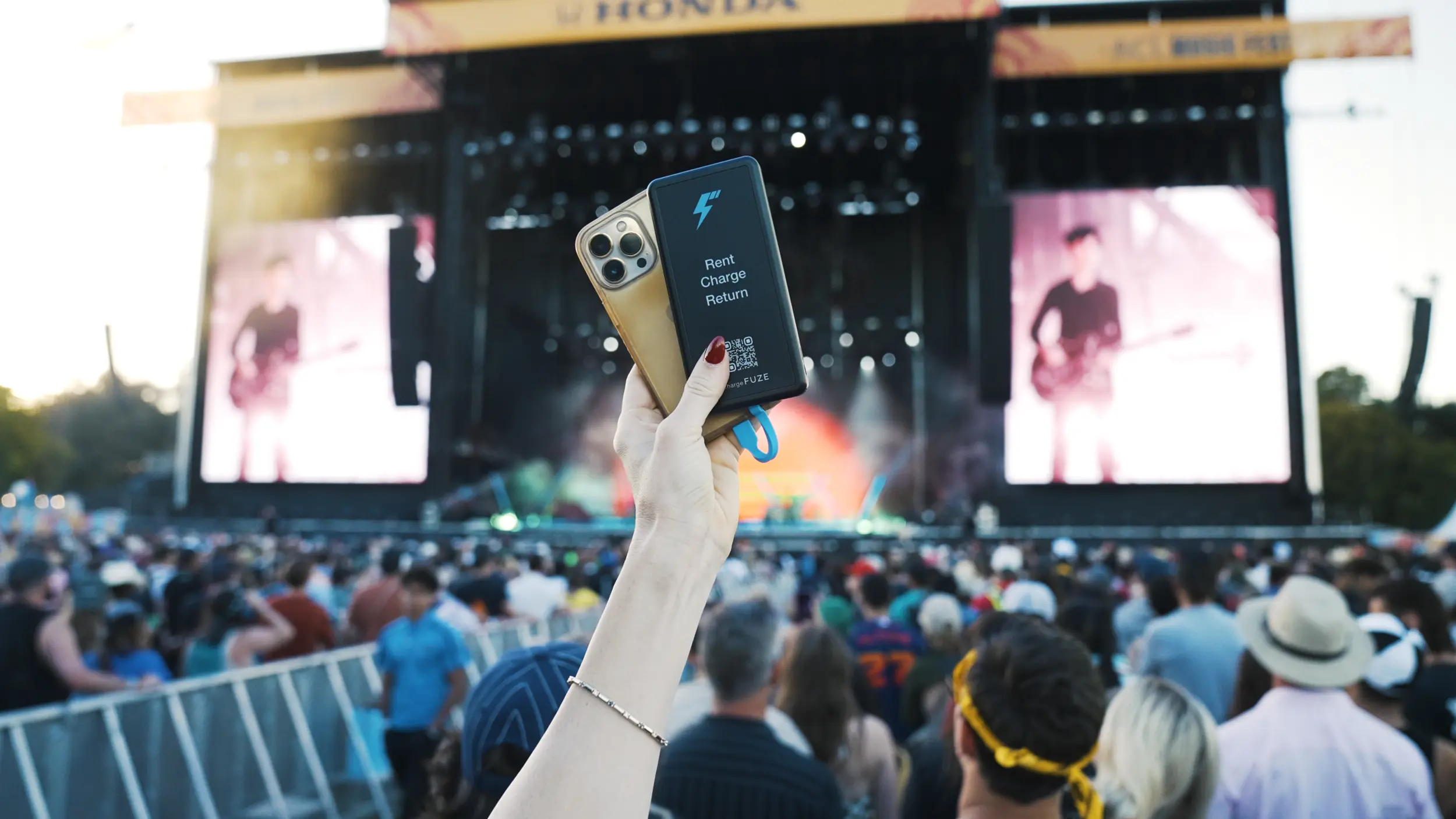
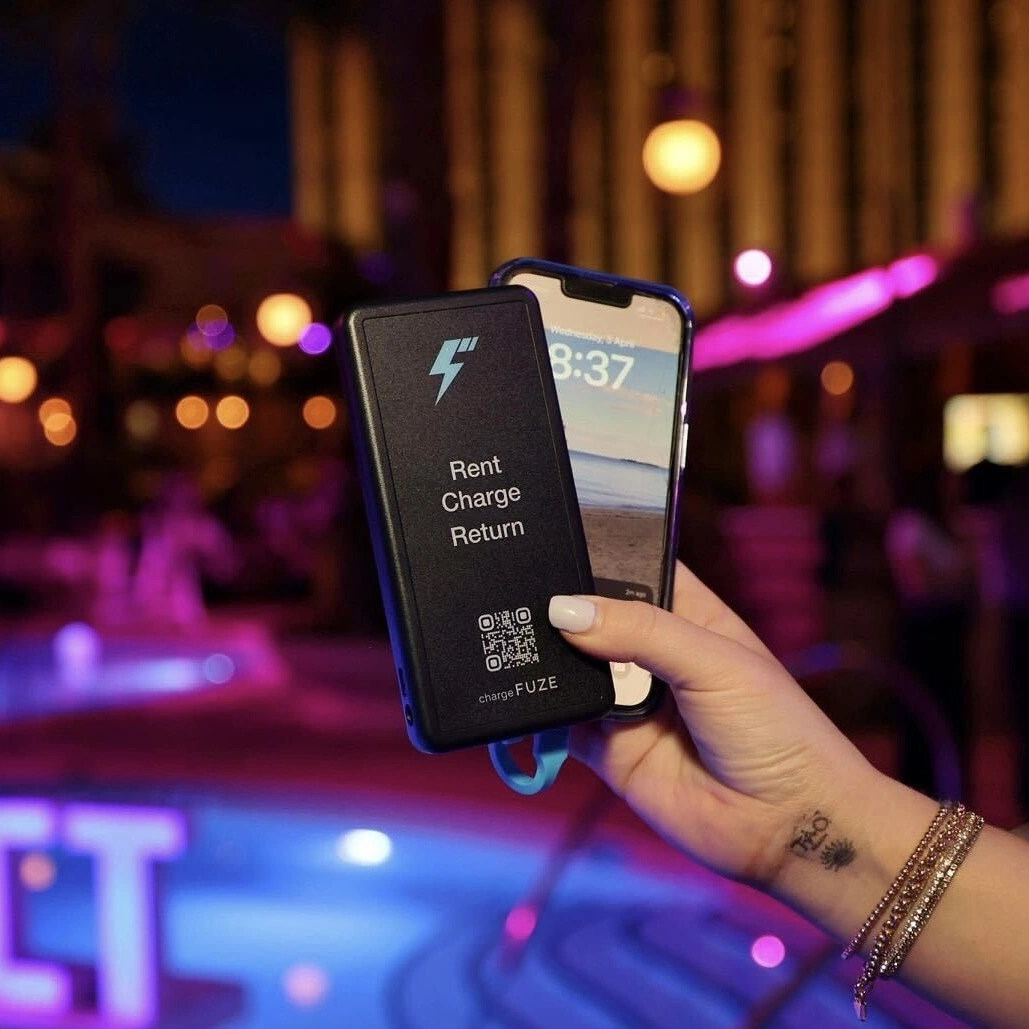
The quickest way to fail at digital signage advertising is to hang a screen nobody has a reason to look at. Guests tune out a TV that only plays ads. They do not tune out the screen that fixes their dead battery. A phone charging kiosk pairs the ad with a service: the guest scans to rent a portable charger, carries it while they keep spending, and returns it to any station when they are done.
That pairing is why kiosks make digital signage revenue easier to earn. The screen earns its spot by being useful, so the ads ride along on attention the kiosk already gets. chargeFUZE describes this on its business page as a way to “unlock new revenue streams through venue-based advertising opportunities,” with deployment, maintenance and 24/7 support handled by the network. See chargeFUZE for businesses & venues for how stations are placed. Solomon Schwartz, Head of Sponsorships & Activations at Resorts World, put the result plainly: “we are also able to create additional revenue streams.”
Quick wins
- Place kiosks where guests pause: bars, concession lines, lobbies
- Keep screens at eye level and clear of exits
- Get screen size, orientation and loop length in writing
Step 3: Package & price your ad space
Most venues that ask how to sell ad space skip this step and quote one price. Buyers want options they can compare in a minute. Turn your ad space into three products, using the same buying modes adFUZE offers brands: direct campaigns, programmatic buys and sponsorship.
Package | What the brand gets | Best buyer | How to price it
Loop spot | A set share of the screen loop for a fixed flight, such as four weeks | Local businesses, event promoters | Per week or month, by share of loop
Programmatic | Impressions bought through automated platforms when demand is there | Regional and national brands | Network floor price plus demand
Sponsorship | Category exclusivity, branded stations and chargers, screen takeovers | One anchor brand per category | Flat seasonal or annual fee
Price from your audience numbers, not a guess. Start with the share of the loop, the length of the flight and how exclusive the placement is, then charge more for the dayparts that sell out. Keep the rate card to one page, and offer a short trial flight so a first-time buyer can test the screen before committing to a season.
Quick wins
- Build one rate card with three tiers
- Add a premium for peak dayparts
- Offer first-time buyers a short trial flight
Step 4: Sell direct to local brands
If you are working out how to sell advertising space, start next door. Local businesses already want your guests: the restaurant down the street, the bank branch, the gym, the promoter with a show next month. The OAAA’s Q2 2026 report lists quick serve restaurants, chain food stores, consumer banking, hotels and colleges among the top out of home categories, and Local Services & Amusements grew 10.5%. Those are your first calls.
Knowing how to sell advertising to a local owner is mostly about making yes easy. Bring a one-page media kit with your audience numbers, a photo of the kiosk in place and the rate card. Pitch an offer they can track, such as a QR code for a discount. In research by the OAAA and The Harris Poll, 87% of adults ages 18 to 64 said they would redeem a time-limited offer delivered through an out of home ad, so a coupon makes a natural first campaign.
Quick wins
- List 20 nearby businesses that sell to your guests
- Lead with a trackable QR offer
- Renew in month two with results in hand
Sell the sponsor first. One anchor brand on the stations, the chargers and the screen can carry the season, and every loop spot you sell after that is upside. Nick Schling, Director of Operations at the PGA, said chargeFUZE “provides great exposure for sponsors through the interactive video screens.”
Step 5: Plug into programmatic DOOH demand
You will never have time to sell every slot yourself. Programmatic DOOH fills the gaps: brands and agencies buy screen time through automated platforms, and their ads play on the screens that match the audience, place and time of day they want. For a venue, that means unsold time can still earn without anyone picking up a phone.
Connecting one screen to those platforms is hard. Joining a network that is already connected is not. adFUZE, FUZE Technology’s advertising business, sells programmatic campaigns through “automated ads placed across our robust network” of screens, next to direct DOOH advertising and sponsorships. Read Kiosks as a DOOH advertising channel to see the format the way media buyers do. The industry is moving the same way: in September 2026 the OAAA launched a programmatic center to make out of home “easier to plan, buy, measure and integrate.”
Quick wins
- Ask which buying platforms the network connects to
- Ask how direct, programmatic and venue messages share the loop
- Block categories you will not run
Step 6: Report results advertisers trust
A brand that cannot see its results will not renew. Out of home has a name for the basic receipt: proof of performance, which the OAAA defines as “certification by an OOH company that contracted advertising services has been rendered.” For a screen, that means proof of play: when each ad ran, where and how often.
Then add the numbers only an interactive kiosk gives you. Every rental is a logged interaction, and QR scans and redemptions show action, not just exposure. adFUZE describes its offer as “verified views and measurable outcomes,” and chargeFUZE lists “remote network management and data tracking” on its business page. Match your report to the terms buyers already use; the OAAA out of home resources cover measurement, guidelines and a glossary of the words on every media plan.
Quick wins
- Send proof of play at the end of every flight
- Show QR scans and redemptions next to impressions
- Use the buyer’s terms: impressions, flight, dwell time
Step 7: Grow advertising revenue without hurting the guest experience
The fastest way to lose advertising revenue is to annoy the guests it depends on. Keep the kiosk a charging station first: rental steps and the support line stay on screen, ads rotate around them, and nothing slows the scan-to-rent flow. chargeFUZE prints its 24/7 text support number on its digital screens for that reason.
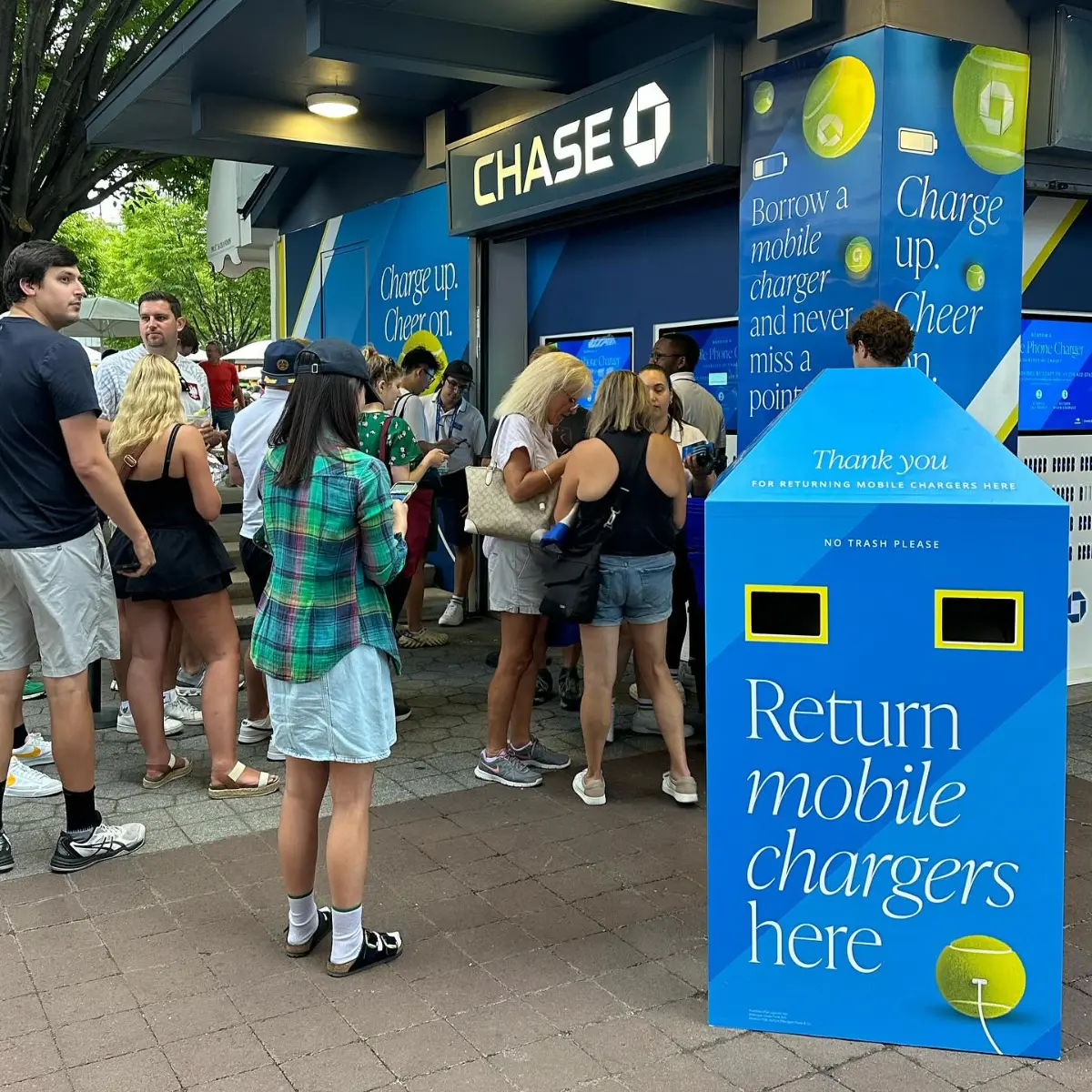
Grow in this order: more screens where guests already pause, then sharper packages, then higher prices on dayparts that sell out. Cap the share of the loop that goes to paid ads, mix in your own messages, and read guest feedback every month. Sponsorship is the easiest place to grow, because a brand that pays for free charging improves the visit. At the US Open, chargeFUZE served as official mobile charging partner “in conjunction with presenting sponsor JP Morgan Chase.”
Expect ad income to build over time. chargeFUZE’s distributor page frames ads as a way to “Leverage Ads to Reduce Payback Period,” which is the right mindset for a venue too: a lever you plan around, not a guaranteed number. For the full picture, see Kiosk revenue beyond rentals.
Quick wins
- Cap the paid share of the loop
- Keep rental steps and support on screen
- Review guest feedback every month
Sources
- OAAA, “Out of Home Advertising Revenue Reaches Record $9.46 Billion” (March 17, 2026)
- OAAA, “From Coca-Cola to OpenAI, Brands Are Betting Bigger on OOH” (Q2 2026 revenue, August 18, 2026)
- OAAA and The Harris Poll, “OOH Turns Attention Into Action Across the Consumer Retail Journey” (September 17, 2026)
- OAAA, “OAAA Launches Programmatic & Automation Center of Excellence” (September 24, 2026)
- OAAA, OOH Glossary of Terms (dwell time, place-based media, proof of performance)
- adFUZE (adfuze.com), chargeFUZE /businesses, /events, /distributors and /contact-sales pages
Venue ad space questions
How do you sell advertising space at a venue?
Count your weekly visitors and dwell time, place screens where guests pause, and package the time as loop spots, programmatic inventory and sponsorships. Then sell advertising space to local brands with a one-page media kit, and send proof of play after every flight so buyers renew.
What is DOOH advertising?
Digital out-of-home (DOOH) advertising runs on screens in public places that can change content remotely, from roadside billboards to screens inside venues. DOOH made up 38.4% of US out of home revenue in Q2 2026, according to the OAAA.
Do charging kiosks count as digital signage?
Yes. A charging kiosk with a screen is digital signage, and in ad terms it is digital place-based media, the OAAA’s category for addressable screens inside venues. The difference is that guests walk up to it to rent a charger, so it gets attention most signage has to compete for.
Keep reading
All articles