
Text +1 (213) 928-7320
Let's chat!

How Phone Charger Kiosks Generate Revenue Beyond Rentals
When most people think about phone charger kiosks, they picture the transaction everyone already understands: a consumer rents a portable battery, uses it for an hour or two, returns it, and the operator pockets a few dollars. The shared power bank market was valued at roughly $1.5 billion in 2024 and is projected to exceed $5 billion by 2033, growing at a compound annual rate above 15 percent. But rental income alone does not tell the full financial story of a modern charging kiosk. Beneath the surface of every kiosk sits a second economy. One built on digital screens, brand partnerships, consumer data, and captive attention. Distributors and venue operators who tap into these additional streams can dramatically improve unit economics and create recurring revenue that does not depend on a single consumer swiping their credit card. This article breaks down the revenue layers beyond rentals, explains the mechanics behind each, and offers a practical framework for stacking them.
The Attention Asset Most Operators Overlook
A phone charger kiosk sits in a high-traffic location and holds their attention for several minutes while they interact with a screen to start a rental. In advertising, that combination of foot traffic, intent, and dwell time is extraordinarily valuable. Most digital ads compete for fractions of a second of passive attention. A kiosk screen captures active, undivided attention from someone standing directly in front of it.
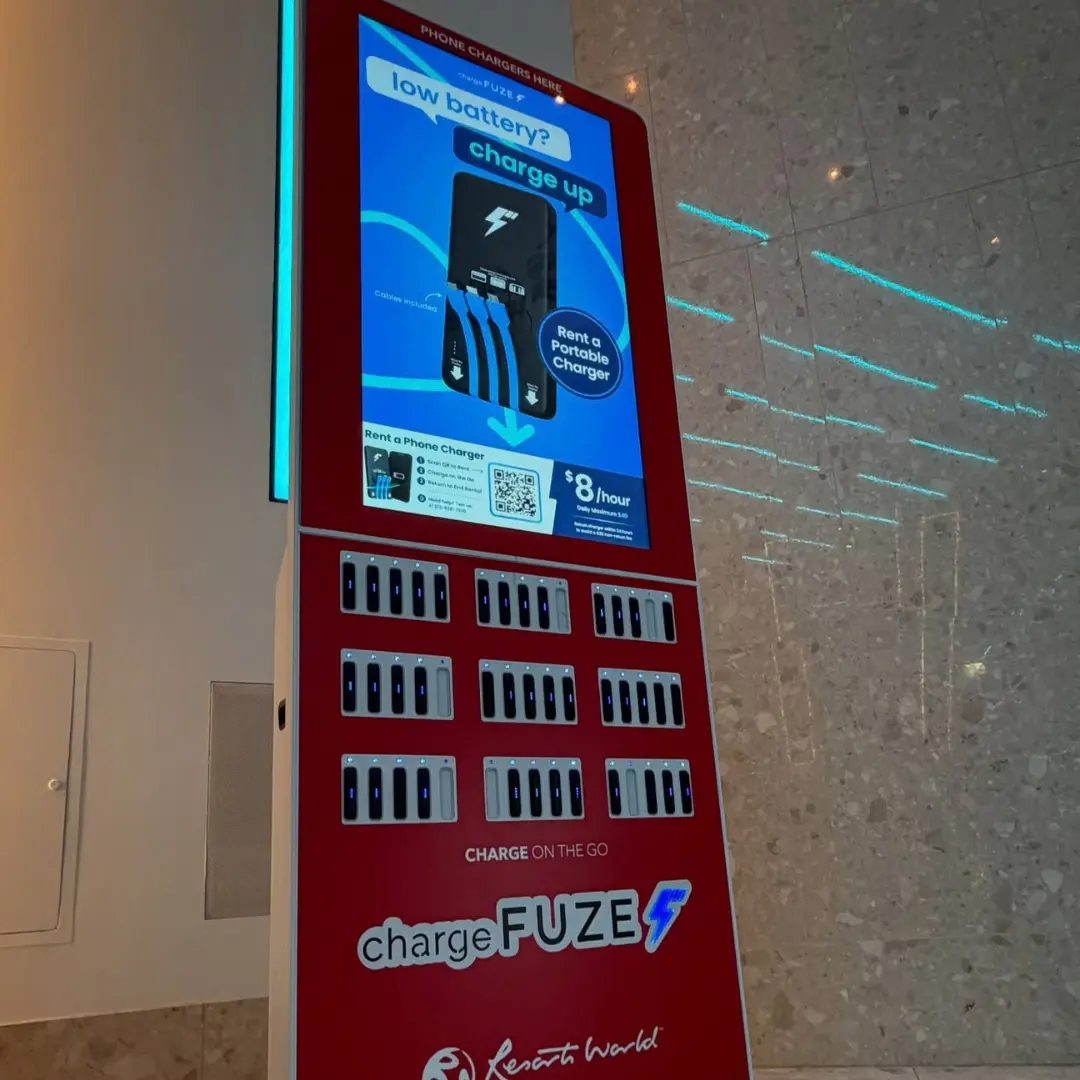
This is the foundation of Digital Out-of-Home advertising, commonly referred to as DOOH. The global DOOH market was valued at more than $20 billion in 2024 and is projected to nearly double by the end of the decade, with annual growth rates above 10 percent. Programmatic DOOH expanded by 34 percent in the United States in 2024 alone. More than 70 percent of DOOH ad spend in North America now transacts programmatically, meaning the buying and selling process is increasingly automated, data-driven, and accessible to smaller-screen networks. Phone charger kiosks fit squarely into the venue-based DOOH category, alongside screens in gyms, airports, retail stores, and restaurants.
How DOOH Advertising Revenue Works on Kiosks
The economics of screen-based advertising on phone charger kiosks follow the same pricing model used across the broader DOOH industry: cost per thousand impressions, or CPM. An impression is recorded each time an ad is displayed on screen while a viewer is present. Venue-based DOOH screens typically command CPMs ranging from $2 to $15, with the average hovering around $7 to $8 for programmatic placements and higher for direct-sold inventory in premium locations. The revenue model typically works in one of three ways:
- Programmatic network participation. The distributor connects their kiosk screens to a DOOH supply-side platform (SSP) such as Vistar Media, Place Exchange, or Broadsign. Advertisers bid on the inventory through demand-side platforms, and the distributor earns a share of the ad spend, usually between 40 and 60 percent of the CPM, depending on the agreement and the volume of screens in the network.
- Direct ad sales. The distributor sells advertising space directly to local businesses, regional brands, or venue partners. This approach commands higher effective CPMs because there is no intermediary taking a cut, but it requires a sales effort. A kiosk in a sports bar, for instance, might sell screen time to a nearby auto dealership, a local law firm, or a beverage brand looking for hyperlocal exposure.
- Hybrid model. The most common approach combines programmatic fill for unsold inventory with direct-sold campaigns for premium slots. This ensures screens are always generating revenue while reserving the most valuable placements for higher-margin direct deals.
The key metric that determines ad revenue potential is proof of viewership. Networks that can demonstrate verified impressions through sensors, camera-based audience measurement, or app interaction data command meaningfully higher CPMs than networks relying solely on estimated traffic counts.
Sponsor Integrations: Turning the Kiosk Into a Brand Platform
Advertising is one form of brand monetization, but sponsorship often pays better. A sponsored kiosk becomes a branded touchpoint rather than a generic utility. Revenue typically takes several forms:
- Custom-branded hardware. A sponsor pays to wrap the physical kiosk with their brand identity, including logo, colors, and messaging, applied directly to the unit's exterior. This is the simplest form of sponsorship and is particularly popular at events, where organizers sell charging station sponsorship packages alongside other event assets. Event planners routinely sell branded charging station sponsorships for $3,000 to $5,000 per unit when the rental and branding cost to the organizer is around $1,100, creating a strong margin on every placement.
- Exclusive screen takeovers. Instead of sharing screen time with a rotation of advertisers, a sponsor purchases 100 percent of the digital display inventory on a kiosk or group of kiosks. This is common in hospitality environments. A resort casino, for instance, might dedicate all kiosk screens to promoting its restaurants, shows, and loyalty program rather than selling that inventory to outside advertisers.
- Sponsored charging sessions. In this model, a brand underwrites the cost of the rental so consumers charge for free, and the brand receives visibility through a "Charging brought to you by [Brand]" message on the screen, the app interface, or the power bank itself. This approach eliminates price friction for the consumer, increases rental volume, and gives the sponsor a direct association with a positive consumer experience. Universities have partnered with alumni sponsors, hospitals with health-tech companies, and stadiums with team sponsors, using exactly this structure.
- Co-branded portable chargers. Some networks allow sponsors to brand the portable power banks themselves. A consumer picks up a charger featuring a brand's logo and carries it around a venue for hours, essentially becoming a walking advertisement. At events drawing tens of thousands of attendees, this creates enormous impression volume at a cost well below traditional experiential marketing.
ChargeFUZE offers customizable digital displays and branded station wraps that allow event organizers and venue partners to integrate sponsor messaging directly into the charging experience. This model creates new advertising touchpoints while simultaneously serving a practical consumer need.
Data-Driven Engagement: The Revenue Layer Nobody Talks About
Every interaction with a phone charger kiosk generates data. Aggregated and anonymized, this data has real commercial value. The data generated falls into several categories:
- Usage analytics reveal when and where demand peaks. A distributor can see that a particular venue's kiosk gets 80 percent of its rentals between 9 PM and midnight on weekends, or that a hospital lobby kiosk has steady all-day demand with a spike during visiting hours. These patterns are valuable not only for optimizing kiosk placement and battery inventory, but also for selling to advertisers who want to target specific dayparts and audiences. An advertiser willing to pay a premium to reach nightlife consumers can bid higher on kiosk inventory that demonstrably serves that demographic during peak hours.
- Foot traffic intelligence is increasingly valuable to venue operators and commercial real estate firms. Charging kiosks, by nature of their placement in high-traffic zones, serve as proxy sensors for consumer movement. Malls with charging stations have reported a 35 percent increase in customer dwell time, and the data confirming that pattern is itself a sellable asset. Venue operators can use kiosk usage data to justify lease rates, optimize tenant placement, and measure the impact of marketing campaigns on physical foot traffic.
- QR code and mobile engagement data bridge the gap between physical advertising and digital conversion. When a kiosk displays a QR code alongside an ad, the resulting scan generates a measurable interaction that advertisers covet. QR code campaigns achieve an average click-through rate of 37 percent, which is three to four times higher than standard digital ads. For charging kiosks, the engagement rate can be even higher because the consumer is already holding their phone, the screen is directly in front of them, and they have a few minutes of idle time while the rental initiates.
- First-party audience data, collected through app registrations or opt-in interactions, can be used to build anonymized audience segments for retargeting. A kiosk network that knows a user frequents sports venues on weekends can surface that segment to sports-related advertisers through programmatic channels. This is the same model that retail media networks use to monetize shopper data, and it is increasingly available to any physical-world network with enough scale and the right data infrastructure.
Done correctly, data-driven engagement becomes a sustainable revenue layer that grows more valuable as the network expands.
Venue-Level Revenue Sharing: Aligning Incentives Beyond Placement Fees
The traditional relationship between a kiosk distributor and a venue is straightforward: the venue provides space, and the distributor pays a placement fee or shares a percentage of rental revenue. But when advertising and sponsorship enter the equation, the revenue-sharing structure becomes more nuanced and more profitable for both sides.
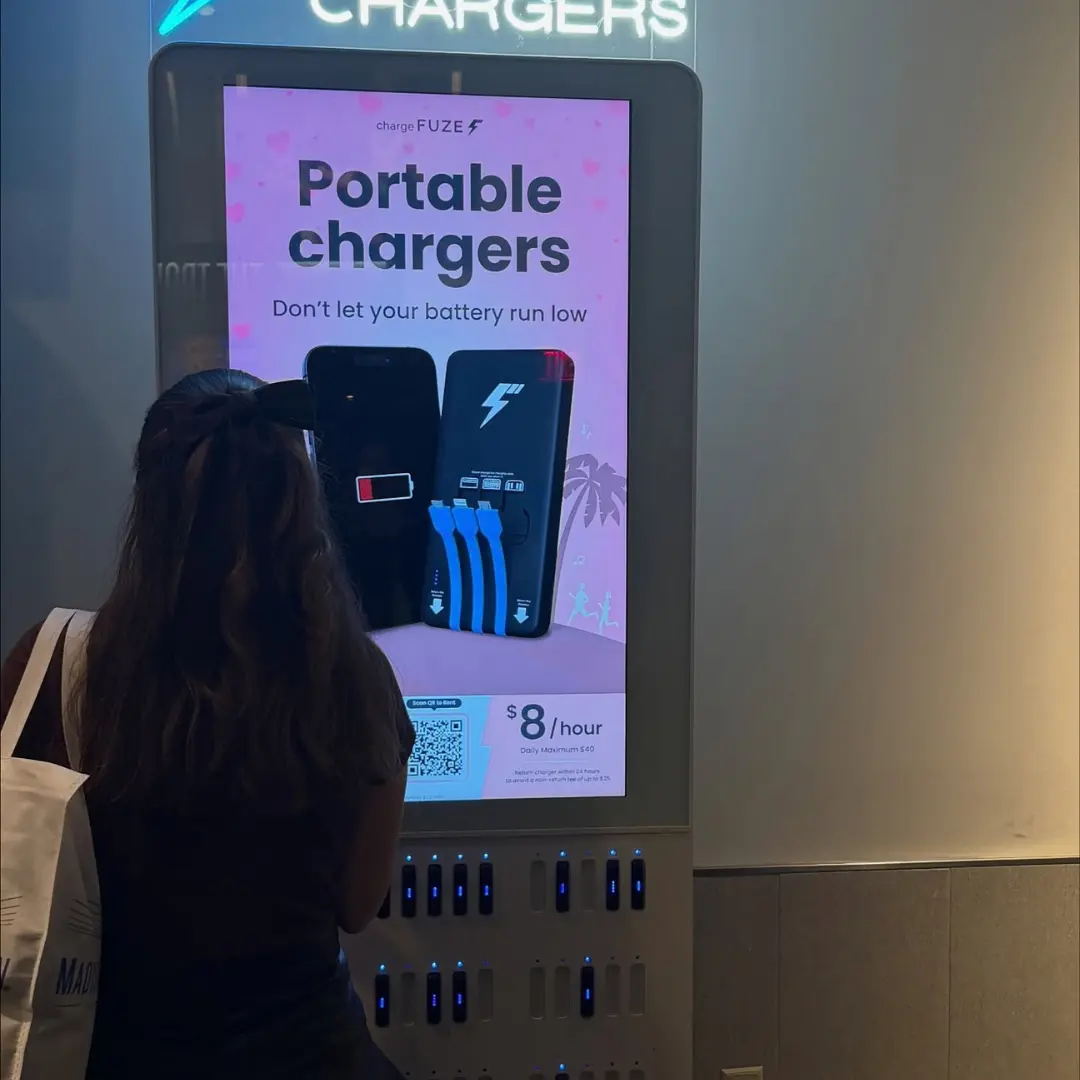
A distributor who generates $500 per month in rental revenue and $300 per month in ad revenue from a single kiosk has a fundamentally different pitch to a venue owner than one offering rentals alone. The venue can participate in the upside of the advertising layer, which gives them a financial incentive to place the kiosk in the highest-traffic location, promote its presence to patrons, and integrate it into their own digital channels.
chargeFUZE's distributor model illustrates how this works at scale: the company handles hardware manufacturing, software development, and 24/7 consumer support, while distributors focus on venue relationships and local market growth. When advertising and sponsorship revenue are layered on top of the core rental model, the distributor's per-kiosk economics improve substantially, and the value proposition to venues becomes more compelling.
Stacking Revenue Streams: A Practical Framework
The most successful phone charger kiosk operators do not rely on a single revenue source. They stack multiple streams on a per-kiosk basis, creating a blended revenue profile that is more resilient and more profitable than any individual stream. Here is what a realistic monthly revenue stack might look like for a single kiosk in a high-traffic venue:
- Rental fees. Eight to twelve rentals per day at an average of $3 per session, producing $720 to $1,080 per month in gross rental revenue before revenue sharing.
- Programmatic DOOH advertising. Two hundred to four hundred daily impressions at a $7 CPM, generating $40 to $85 per month in ad revenue.
- Direct-sold local advertising. One or two local advertisers pay a flat monthly rate of $75 to $150 for premium screen placement, adding $75 to $300 per month.
- Sponsorship or branded experience. A venue-level or network-level sponsor contributing $100 to $500 per month per kiosk, depending on the scope and exclusivity of the deal.
- Data and engagement fees. Anonymized audience data shared with advertisers or venue partners, generating $25 to $75 per month in incremental value.
- QR code and lead generation campaigns. Performance-based fees from brands running trackable promotions through the kiosk interface, adding $20 to $50 per month per active campaign.
At the conservative end, a well-placed kiosk generates roughly $980 per month. At the higher end, the same kiosk generates a total blended revenue of $2,100 per month. The rental fees remain the largest single line item, but the non-rental streams collectively contribute 25 to 50 percent of total revenue.

Getting Started: Three Steps to Activate Non-Rental Revenue
For distributors who are currently generating rental revenue and want to layer additional streams, the path forward involves three practical steps:
- Audit your screen inventory. Determine how many of your deployed kiosks have digital displays capable of running dynamic content. Kiosks with static screens or no screens at all will need hardware upgrades before they can participate in DOOH advertising or sponsorship campaigns. Even a modest screen running a simple content rotation can begin generating impressions.
- Connect to a programmatic DOOH platform. Some platforms allow screen networks of virtually any size to plug into the programmatic ecosystem. The integration typically involves installing software on the kiosk's content management system and registering each screen's location, audience profile, and available inventory. Once connected, advertising revenue begins flowing with minimal ongoing effort.
- Build a local sponsorship pitch. Identify the two or three brands most relevant to each venue's audience and propose a branded charging experience. A brewery sponsoring a kiosk in a craft beer bar, a fitness brand sponsoring one in a gym, or a hotel brand sponsoring kiosks across an airport terminal. These are straightforward pitches that deliver clear value to the sponsor and meaningful revenue to the distributor. Start with one pilot deal, measure the results, and use that case study to sell the next ten.
The phone charger kiosk industry is still in a phase where most operators focus almost exclusively on rental economics. That creates an opportunity for distributors who recognize that every kiosk is a screen, a data point, a brand platform, and an engagement channel. The rental fee gets the kiosk into the venue. Everything else determines how profitable it becomes once it is there.
Sources
- Global Growth Insights – Cell Phone Charging Station Market Report (2024)
- Grand View Research – Digital Out-of-Home Advertising Market Report (2024)
- Place Exchange – H2 2024 Programmatic OOH Trends Report
- StackAdapt – DOOH Advertising Costs Guide
- Out of Home Advertising Association of America (OAAA) – 2024 Consumer Survey via Harris Poll
- Kiosk Marketplace – "How to Monetize DOOH Advertising with Self-Service Devices" (2023)
- Bitly – QR Code Statistics and State of QR Codes Report (2025)
- SponsorFlo – Event Sponsorship Management Guide (2026)
- Statista – Global DOOH Ad Revenue Forecast (2024–2029)
- chargeFUZE – Events Page and Business Solutions
- Global Growth Insights – Cell Phone Charging Station Market: Venue Dwell Time and Engagement Data
