Text +1 (213) 928-7320
Let's chat!

9 Ways Theme Parks Use Mobile Phone Charging Kiosks
Tickets, ride reservations, food orders and photos all run on one battery. Here are nine ways parks use charging kiosks to keep guests powered from the gate to the fireworks.


The verdict
A theme park day starts and ends on the phone, from the ticket scan at the gate to the video of the closing show. By early afternoon plenty of those batteries are in the red, and a guest watching a battery icon is a guest thinking about the exit.
For park operators, that puts charging inside the guest experience, not off to the side at guest services. Below are nine ways parks put charging kiosks to work, and how to add them without a new system to run.
Why theme park guests need a charge by noon | Every ride, order & photo runs through one battery
Most theme park tips for guests come down to planning: buy tickets early, book ride times, eat off peak. Much of that planning now sits in an app. About nine in ten U.S. adults (91%) own a smartphone, according to Pew Research Center, and inside a theme park that one phone does the work of ticket, map, wallet and camera. The theme park guest experience now depends on it lasting into the evening.
Summer heat makes it harder. Apple designs iPhone for ambient temperatures between 32 and 95°F, and it lists long stretches of camera or GPS use in hot conditions or direct sunlight among the things that can make a phone change its behavior to regulate its temperature, which can include charging that slows or stops (Apple Support). For the wider case across venues, see Charging that keeps guests happy.
- Apps stay usable Ride reservations, mobile orders and digital tickets only help while the phone is still on.
- Guests stay longer A charged phone means one less reason to leave before the evening show.
- Spend keeps moving Guests keep riding and buying while the charger rides along in a pocket.
95°F is the top of the ambient temperature range Apple designs iPhone for
Ways theme parks use mobile phone charging kiosks | Nine jobs one kiosk does across a park
Each idea starts with something guests already do on their phones. A mobile phone charging kiosk keeps that habit working, and because guests carry the power bank away, the charge goes wherever they head next.
Keeping park apps & virtual queue times in reach | A dead phone can cost a guest their place in line

A virtual queue holds a guest's spot for a ride while they spend the wait somewhere else, eating or riding something with a shorter line. How timed ride lines work is simple enough. The catch: the reservation and the alert that the return window is open both live on the phone. When the battery dies, the guest loses track of their spot and may end up at guest services to sort it out.
Kiosks at the entry plaza and the main ride hubs let guests top up before the first return time of the day.
- Where kiosks go: Entry plaza, ride hubs
- What it protects: Return times, digital tickets
Powering mobile ordering at food stands | Orders placed from the line need a phone at pickup
Back in 2020, one major U.S. regional park chain already said more than 75% of its park restaurants offered mobile ordering through its app, according to Payments Dive.
The order goes in on the phone, and the pickup alert comes back to the same phone. Kiosks in food courts and on dining patios reach guests at one of the few points in the day when they sit still long enough to rent a charger and let it work.
- Where kiosks go: Food courts, dining patios
- What it protects: Orders, pickup alerts
Saving the day's photos & videos | Guests film every ride, parade & character meet

The camera works hard all day in a park. Guests record ride videos and parade clips, line up for a photo with a costumed character, and post much of it before they get home. Each post puts your park in front of their friends.
Put kiosks where cameras come out, like show areas and the landmark everyone poses in front of.
- Where kiosks go: Show areas, photo spots
- What it protects: Photos, video, social posts
Charging near rides instead of phone lockers | Empty-pocket rides send phones to a locker
Many thrill rides run an empty-pockets policy, so guests leave phones in lockers at the queue entrance. Theme Park Insider has pointed out the tension: parks have made phone use close to mandatory, with tickets, reservations and even payments in apps, and then ask guests to give the phone up for the ride.
Phone lockers keep a device safe. They don't give it back with more battery.
A kiosk at the ride exit, next to the locker bank, catches guests the moment they pick their phone back up. They rent a charger and head to the next ride with it in a pocket.
- Where kiosks go: Ride exits, locker banks
- What it protects: Battery between rides
chargeFUZE solution: Businesses
Water park days without a dead phone | Phones spend the day in a bag, a pouch or a locker
Lists of water park essentials usually include a waterproof phone pouch, and for good reason. Apple says splash and water resistance on iPhone is not a permanent condition, that it can decrease with normal wear, and that liquid damage is not covered under warranty (Apple Support).
So phones stay dry and out of reach for most of the day, then come out on breaks. Kiosks at cabanas and locker rooms line up with those breaks, and guests can drop the power bank back before the next slide.
- Where kiosks go: Cabanas, locker rooms
- What it protects: Dry breaks, group check-ins
Helping families find each other | A charged phone is the fastest way to regroup
Groups split up all day in a park. One parent takes the kids on a ride while another waits for food, and the teenagers head off on their own. As The Points Guy notes in its advice on getting separated at theme parks, a phone usually makes reuniting a quick text or call, until the phone is dead.
Kiosks near guest services and shaded rest areas give parents a fast fix when a phone drops to single digits. chargeFUZE lists safety among the reasons venues add charging: guests get peace of mind and can enjoy the venue worry-free.
- Where kiosks go: Guest services, rest areas
- What it protects: Calls, texts, shared locations
Earning sponsor revenue from kiosk screens | Every kiosk screen is ad space where guests pause
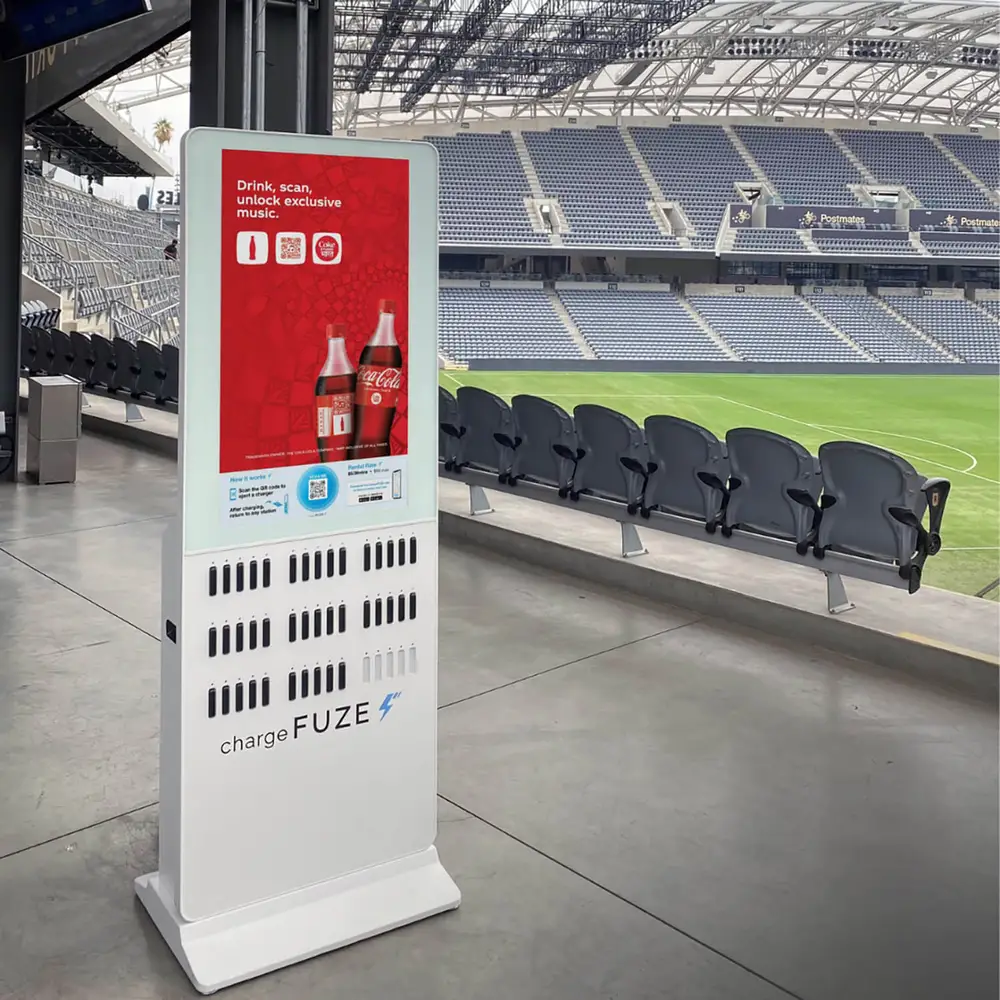
chargeFUZE kiosks carry digital screens, and adFUZE, FUZE Technology's DOOH platform, sells those screens to brands through direct, programmatic and sponsorship buys. Screen ads generate additional revenue and shorten the breakeven period. Sponsors can also brand the stations and power banks, so the logo travels the park in a guest's hand.
Parks already sell naming rights for rides and dining areas. A kiosk adds a placement guests actually stop at, since they stand at the screen while the charger ejects.
- Where kiosks go: High-traffic plazas
- What it adds: Screen and sponsor revenue
chargeFUZE solution: Advertisers
Stretching evening visits | Fireworks & night shows keep guests past sunset
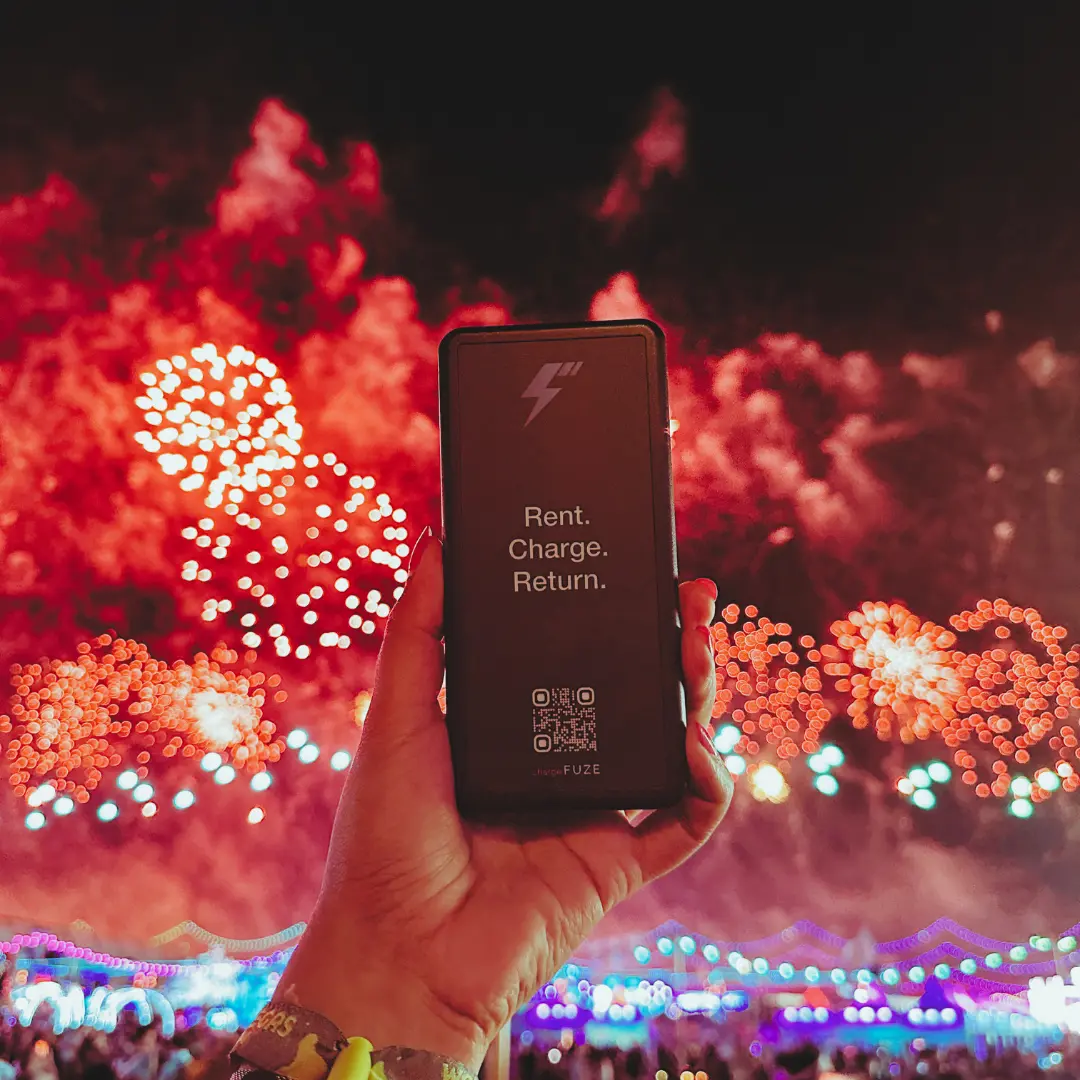
Many parks save their biggest moments for after dark. Those are also the hours when the morning's charge runs out, and a guest down to 5% starts thinking about the parking lot instead of the fireworks.
chargeFUZE reports that on-site charging can increase dwell time as much as 2x at events (chargeFUZE Events), and a park evening works on the same logic. Kiosks near show viewing areas give guests a reason to stay for the finale. A few more along the route to the exit let guests hand the charger back on the way out.
- Where kiosks go: Show viewing areas, exits
- What it protects: The last hours of the visit
Lifting guest experience scores | Small fixes show up in how guests rate the day
Guest surveys ask how the day went, and a dead phone touches several parts of the answer at once, because it takes the app, the food order and the photos down together. Guest satisfaction is the first point chargeFUZE makes to venues: phone charging that keeps guests powered up, connected and engaged.
chargeFUZE's own blog covers how charging connects to time on site in Charging & longer customer visits.
For a park, the practical step is to treat charging like shade or water fountains. Put it on the park map, sign it, then use the station data to see where guests run low.
- Where kiosks go: Parkwide, on the park map
- What it improves: Survey scores, reviews
Renting phone charging kiosks for your park | What hosting chargeFUZE looks like for a park
- Locate Guests find the nearest kiosk on your park map or in the chargeFUZE app.
- Rent They scan the QR code, use the card reader or follow the on-screen steps, and a power bank with built-in cables ejects.
- Drop off They return it to any chargeFUZE station and get a text confirming the return and the total.
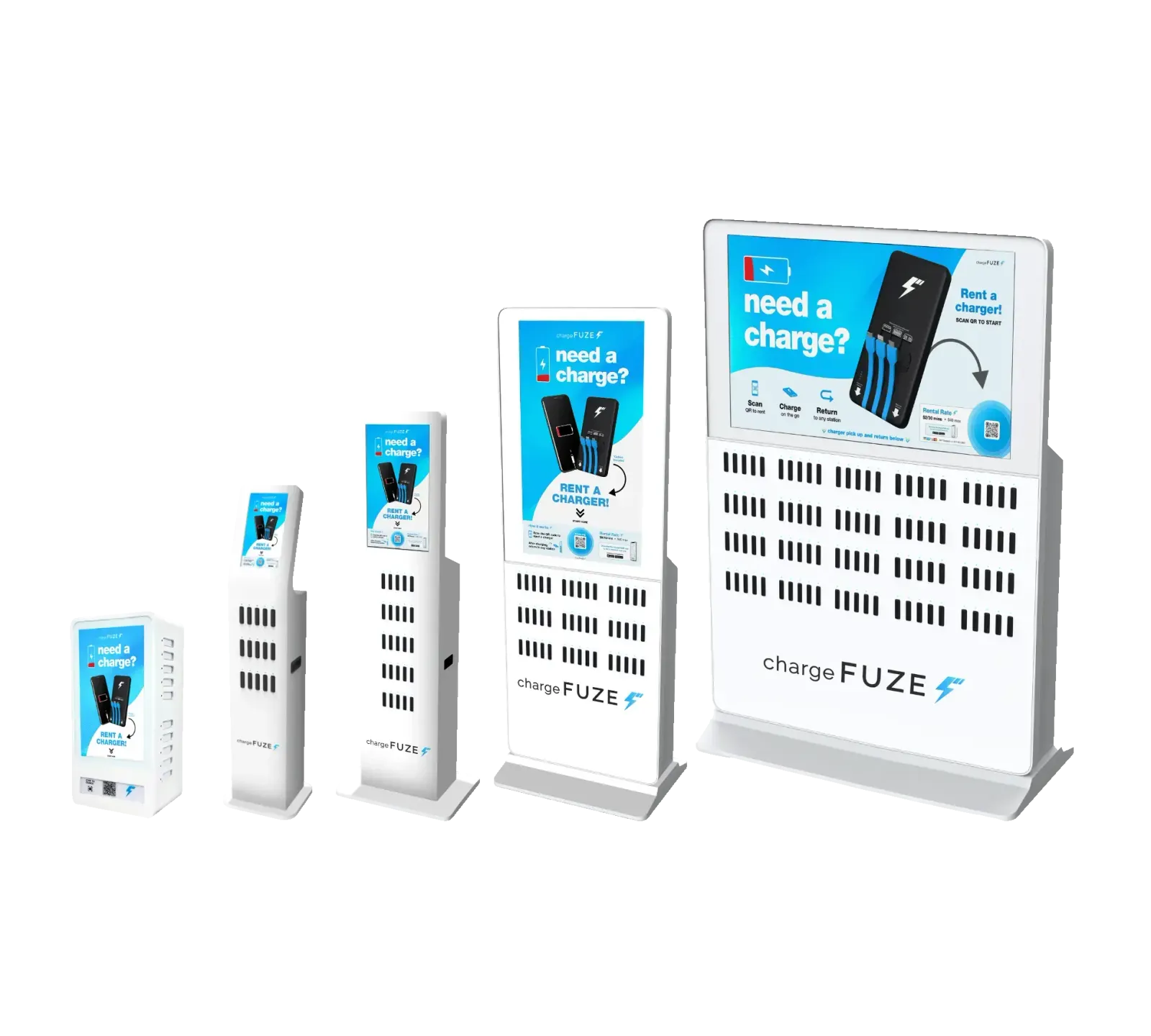
Mobile phone charging kiosk rentals through chargeFUZE come with the hardware, remote network management and data tracking, and 24/7 guest support, so your team isn't handling chargers or payments. Each power bank rental runs on a time-based or flat rate, and the venue earns a revenue share or flat placement fee without handling any transactions directly.
In April 2025, FUZE Technology announced a strategic partnership with Merlin Entertainments, an operator of resort theme parks and other attractions, to bring chargeFUZE stations across Merlin's estate and open their screens to advertisers through adFUZE (chargeFUZE & Merlin Entertainments). Will Obbard, VP of Global Partnerships at Merlin Entertainments, said in the announcement: “This supports us in enhancing the guest experience.”
Theme park charging FAQ
Where should a theme park put charging kiosks?
Where guests already stop: the entry plaza, food courts and dining patios, ride exits next to locker banks, shaded rest areas, guest services and the viewing areas for evening shows. At a water park, add cabanas and locker rooms. Spread them out so a guest is never far from a return slot.
Can guests return a power bank at a different kiosk?
Yes. Guests can return a chargeFUZE power bank to any chargeFUZE station, not only the one they rented from. The chargeFUZE app shows the nearest station with an open slot, and a text confirms the return and the total.
What should guests bring to an amusement park to stay charged?
Start the day at 100% and switch on low power mode early. Pack a waterproof pouch for water rides. Many lists of what to bring to an amusement park also include a power bank, but at an amusement park with chargeFUZE kiosks, guests can rent one on site with the cables built in and drop it at any station before they leave.
Keep reading
All articles