Text +1 (213) 928-7320
Let's chat!

How to Draw More Visitors to Your Trade Show Booth
Most booth traffic is decided before the show opens. These seven steps pull attendees in from the aisle, keep them in your space longer and turn each visit into a lead you can follow up.

The verdict
The short answer: invite attendees before the show, build a booth that explains itself from the aisle, give people a reason to stay, and staff it with people who ask questions instead of reciting a pitch. Then capture every conversation as a lead and follow up within a week. Each step below ends with quick wins you can hand to your team.
68% of attendees say they identify booths to visit before arriving on the show floor (Showhero, State of the Trade Shows 2026)
Your booth traffic plan at a glance. Use this timeline to schedule each step below.
When | What to do | What to measure
6 to 8 weeks out | Order graphics, electrical and any branded charging station | Orders confirmed
3 to 4 weeks out | Send invites with a booth number and meeting link | Meetings booked
Show week | Brief staff, rehearse the demo, test the lead form | Staff briefed
On the floor | Run demos on a schedule and note every lead | Scans per hour
Within 7 days | Send personal follow-ups to every lead | Meetings set
7 steps to more booth visitors
Step 1: Plan trade show marketing before the doors open
Booth traffic starts in your attendees' inboxes, not on the show floor. In Showhero's State of the Trade Shows 2026 report, 68% of attendees said they identify the booths they want to visit before they arrive. If your company is not on that list, you are competing for the leftover minutes between their appointments.
Good trade show marketing gives people a specific reason to add you to the list. Three to four weeks out, email customers and open prospects with your booth number, one thing they can only see or do at the show, and a link to book a 15-minute meeting. Repeat it on LinkedIn and in your email signature, and ask each rep to invite their best accounts personally.
The effort shows up in the results. In CEIR exhibition industry research on in-booth tactics, exhibitors who added pre-event and onsite marketing, such as targeted outreach by phone and email, reported better outcomes from their attendee engagement.
Quick wins
- Send booth invites with a meeting link three to four weeks out
- Give attendees one reason to visit that only exists at the show
- Have every rep personally invite their top accounts
Step 2: Use trade show booth design that reads from the aisle
Attendees decide whether to stop in the few steps it takes to walk past you. A trade show booth that needs explaining loses that moment. Strong trade show booth design answers three questions from the aisle: who you are, what you do and why it matters to the person walking by.
Put one short headline high on the back wall, where it clears the heads of the people standing in front of it, and keep paragraphs off the graphics. Leave the front of the space open so stepping in feels easy; a table across the front edge reads as a barrier. Light the product, not the carpet.
The trade show booth design ideas that pull the most traffic are usually the simplest: a single bold claim, one product people can pick up, and an obvious place to stand. Read your headline from ten feet away before the show. If it takes more than a glance, cut it.
Quick wins
- Test the headline from ten feet away
- Move tables to the sides or the back
- Put the product people can touch at the front edge
Step 3: Give visitors a reason to stay with a charging station
By midafternoon, attendees have been scanning badges, checking the show app and texting colleagues for hours on the same phone. In an LG Electronics survey of 2,000 smartphone users, nearly nine out of ten people said they felt panic when their battery dropped to 20 percent or lower. A visitor watching their battery is already planning where to go next.
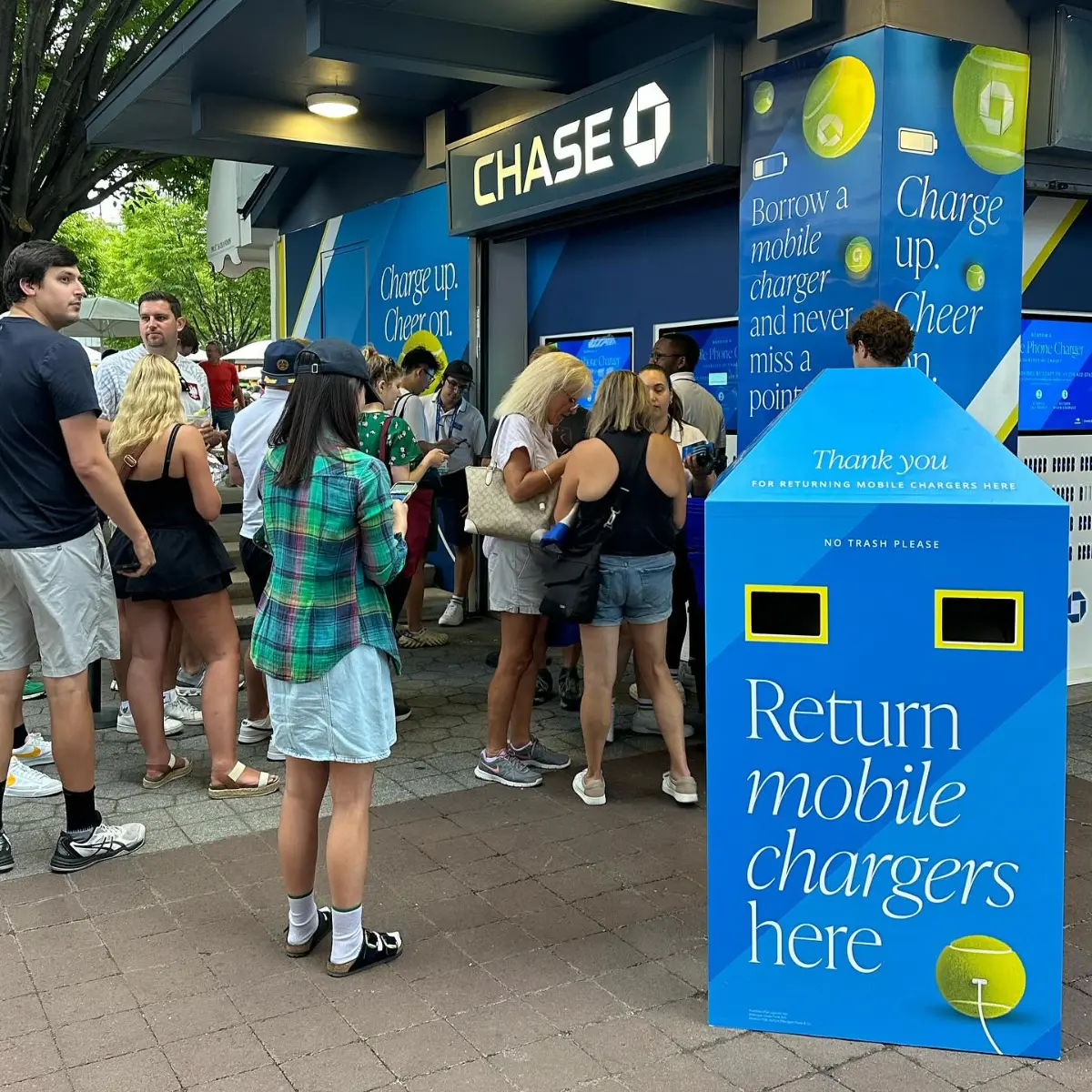
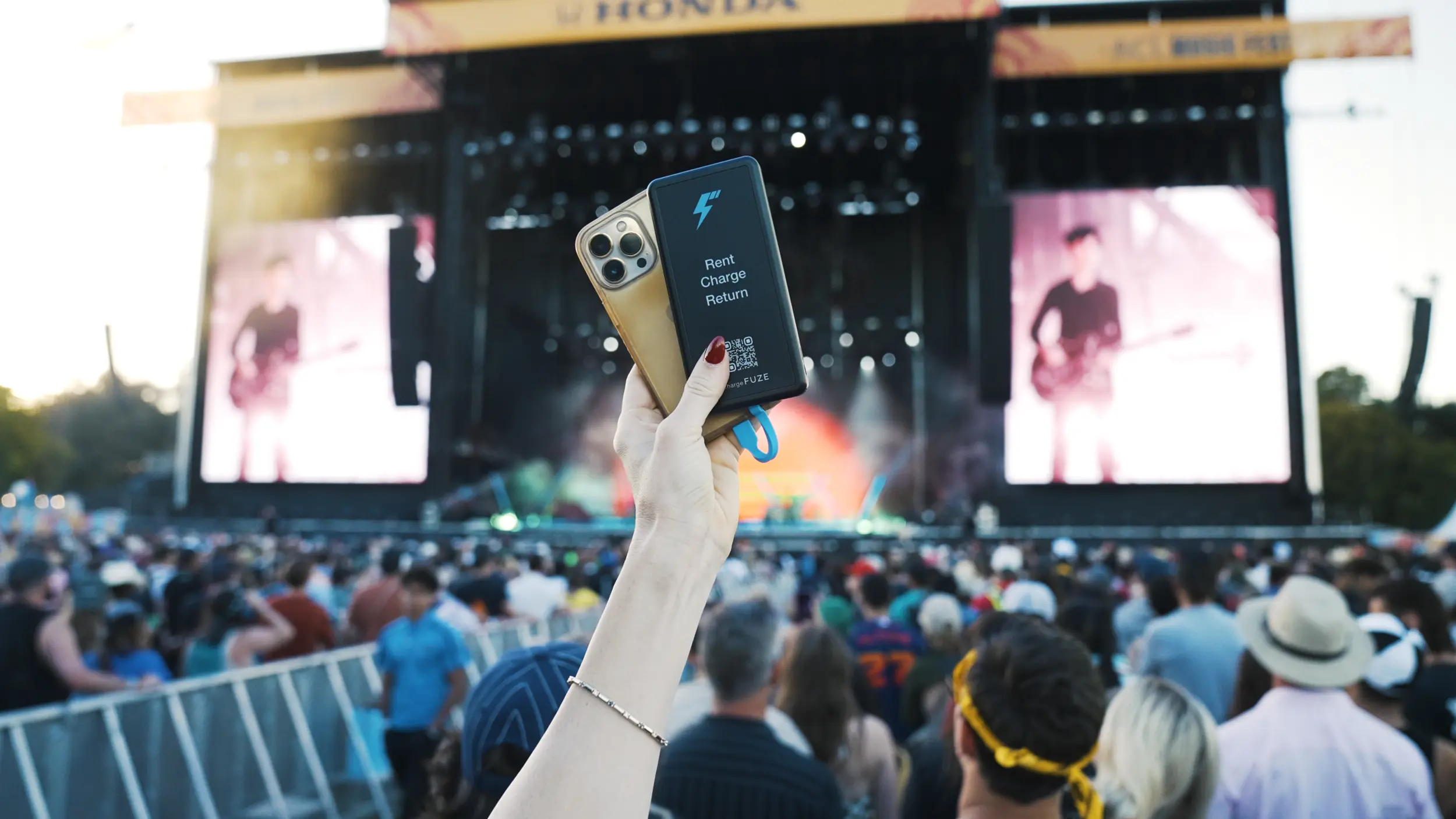
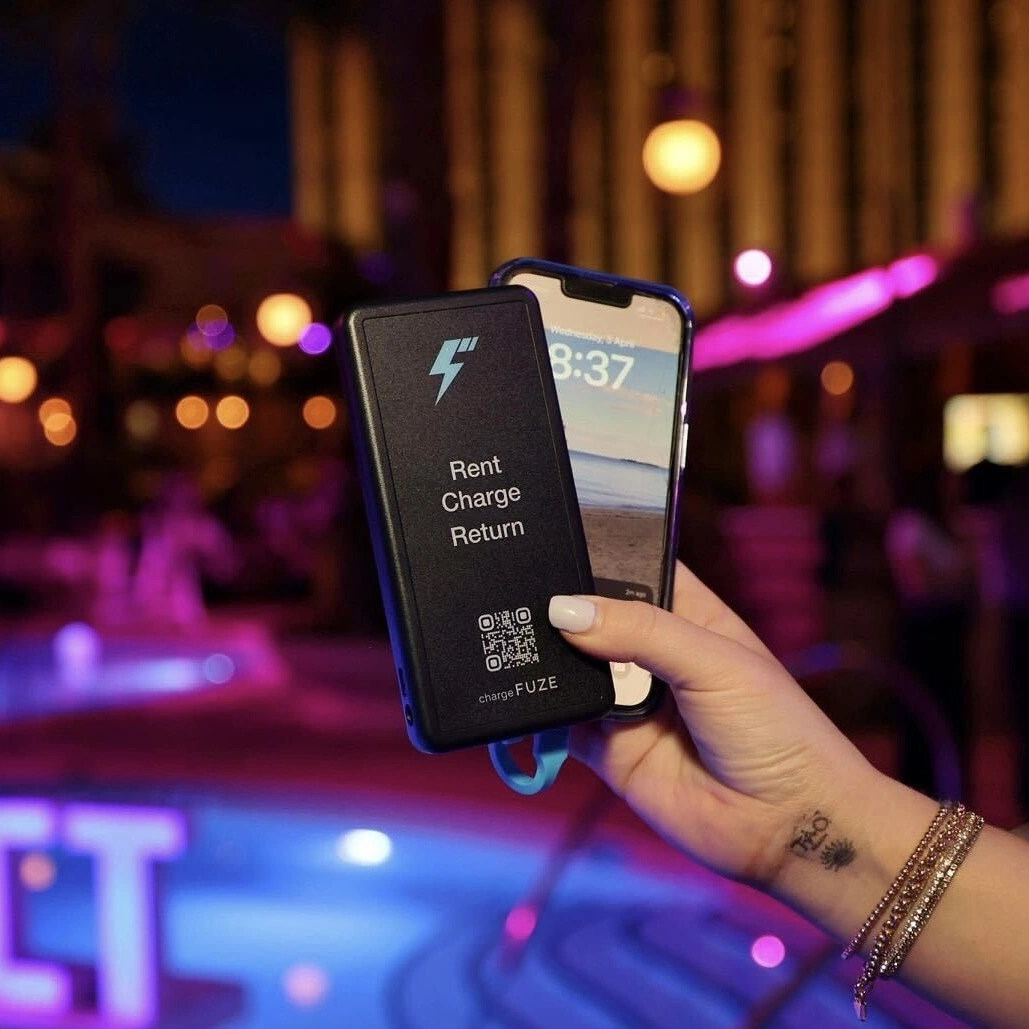
A charging station for trade show booths turns that moment into a visit. Rather than a table of cables that pins people in place, a portable charger rental lets an attendee pick up a power bank at your booth and keep walking the floor with your logo in hand. It builds trade show traffic for you in two ways: people come to you for power, and they stay engaged instead of leaving the hall to find an outlet. For formats and sizing, see our guide to charging kiosks for trade shows.
With chargeFUZE event charging, the station and the batteries can be custom branded, the digital displays are programmable with your own content, and you get post-event data on usage. Guests get a nearly full charge in under an hour and can return the charger to any chargeFUZE station at the event, and chargeFUZE says its stations can increase dwell time as much as 2x.
Quick wins
- Book 4 to 6 weeks ahead for custom branding
- Order a 15-amp circuit with your booth electrical
- Put your booth number and demo times on the station screen
Step 4: Try interactive trade show booth ideas
People remember what they did at a booth far longer than what they read there. CEIR's 2024 report on exhibitor in-booth tactics found that interactive outperforms static engagement. “Our report reveals that tactics fostering interactive, meaningful engagements with people and products receive the highest attendee usage,” said Nancy Drapeau, CEIR's vice president of research.
Exhibitors in that report shared trade show booth ideas you can borrow: a small stage with short presentations through the day and a happy hour at the end of it, a game show contest, and a social media wall that attendees photograph themselves in front of.
Other booth engagement ideas that work on a busy floor: a live demo on a fixed schedule posted at the aisle, a quick product challenge with a leaderboard, or a two-minute assessment that gives the visitor a useful result. Keep each one short enough to finish between sessions. For more, browse these interactive trade show booth ideas from our event networking guide.
Quick wins
- Post demo times on a sign facing the aisle
- Give every activity a result the visitor takes away
- Keep each activity under five minutes
Walk your own aisle at 3 p.m. on day one. Whatever attendees walk past at that hour is the part of the booth to change for day two.
Step 5: Staff the booth for conversations, not pitches
Your staff is the booth. The same CEIR report found that booth staff is critical to exhibitor success, and that 84% of exhibitors invest in booth-staff training. The most useful trade show tips for staff are simple: stand at the edge of the space instead of behind a table, put phones away, and open with a question about the visitor's work rather than a line about your product.
Give everyone on shift one opening question, three qualifying questions and a clear next step to offer, such as a demo, a meeting or a sample. Keep shifts to three or four hours so energy stays up, and brief the team each morning on who is coming by appointment.
Quick wins
- Write one opening question the whole team uses
- Schedule shifts of three to four hours
- Brief staff every morning on booked meetings
Step 6: Turn visits into trade show lead generation
Traffic only pays off if you can act on it. In a CMO Council and E2MA survey of more than 260 brand marketers, 64% said they go to events to source new prospects and 62% to gather and cultivate leads, yet 19% lacked a strategy to act on the leads they gather. Trade show lead generation usually breaks down at the booth, when nobody writes down what the visitor actually needs.
Use the show's lead retrieval app or a short form, and add three notes to every scan: the problem they want to solve, their timeline and the next step you agreed on. Score each lead hot, warm or cold before the visitor walks away. If you sponsor a charging station, its post-event usage data adds another number to your show report next to badge scans.
Quick wins
- Add three notes to every badge scan
- Score leads hot, warm or cold on the spot
- Review the lead list at the end of each day
Step 7: Follow up within a week
A lead cools quickly once the attendee is back at their desk. Within a week, send a personal note that mentions the conversation you had, not a generic thank-you blast, and include the one thing you promised, whether that is a price sheet, a case study or a demo link.
Book your hot leads into meetings before the show ends if you can, and have sales call them first. Warm leads get a short, useful follow-up sequence, and cold leads join your newsletter. Then measure the show against the goals you set: meetings booked, pipeline created and cost per lead. Next year's booth plan should start with those numbers.
Quick wins
- Draft follow-up emails before the show starts
- Send hot leads a personal note within two days
- Report meetings and pipeline within 30 days
Sources
- Showhero, State of the Trade Shows 2026, via Greenhouse Management (greenhousemag.com)
- CEIR, Maximizing Attendee and Exhibitor Engagement on the Exhibition Floor (2024), via IAEE (iaee.com)
- Trade Show Executive, How to Maximize Attendee and Exhibitor Engagement on the Show Floor: CEIR Offers Tactics (July 11, 2024)
- LG Electronics USA via PR Newswire, "Low Battery Anxiety" Grips 9 Out of Ten People (2016)
- CMO Council and E2MA, Customer Attainment From Event Engagement (2013)
- chargeFUZE, Portable Charging Stations for Events and Festivals (chargefuze.com/events)
Trade show booth questions
Quick answers to the questions exhibitors ask most about how to attract people to your booth.
How do you attract people to your booth?
Invite them before the show, then make the booth easy to understand and easy to enter. Attendees often choose booths before they arrive, so a personal invite with a meeting link does more than a bowl of swag. On the floor, a clear headline, an open front, a live demo and a useful amenity such as phone charging give people a reason to stop.
What makes a trade show booth stand out?
One clear message that reads from the aisle, something visitors can do rather than only read, and staff who start conversations. CEIR research on in-booth tactics found that interactive engagement outperforms static displays.
Can you rent a charging station for a trade show?
Yes. chargeFUZE rents portable charging stations for trade shows and expos, with custom-branded stations and batteries, programmable digital displays and post-event data. Fill out the event inquiry form and the team will send a bespoke quote. Plan for 4 to 6 weeks of notice, especially for custom branding.
Keep reading
All articles