
Text +1 (213) 928-7320
Let's chat!

Free vs. Paid Phone Charging Kiosks: Which Revenue Model Works Better for Distributors?
If you are evaluating the phone charging kiosk space as a distributor, the first strategic fork in the road is not whether to buy which hardware or which venues to target. It is the revenue model to build your entire business around. The industry has split into two distinct camps: free-to-use stations that generate revenue through advertising, sponsorships, or venue subsidies, and paid rental models in which consumers pay directly each time they borrow a portable charger. Both approaches serve the same end user, but they create fundamentally different economics, operational demands, and growth trajectories for the distributor running the network.
The global shared power bank market is valued at an estimated $1.5 billion as of 2024 and is projected to exceed $5 billion by 2033, growing at roughly 15% annually. Over 70% of consumers now say they prefer venues that provide charging stations, and 68% of venues with charging infrastructure report measurably higher customer engagement. The opportunity is real, but choosing the wrong model for your market, your capital situation, or your operational capacity can turn a promising territory into a cash-burning exercise.
Understanding the Two Revenue Models
The Free-to-Use Model
Consumers pay nothing to charge their devices in a free charging kiosk deployment. The station is typically a fixed unit where users plug in their phones using built-in cables and wait nearby while the device charges. The venue itself absorbs the cost as an amenity investment, treating charging the same way it treats free Wi-Fi, a service that increases dwell time, customer satisfaction, and secondary spending.
The Paid Rental Model
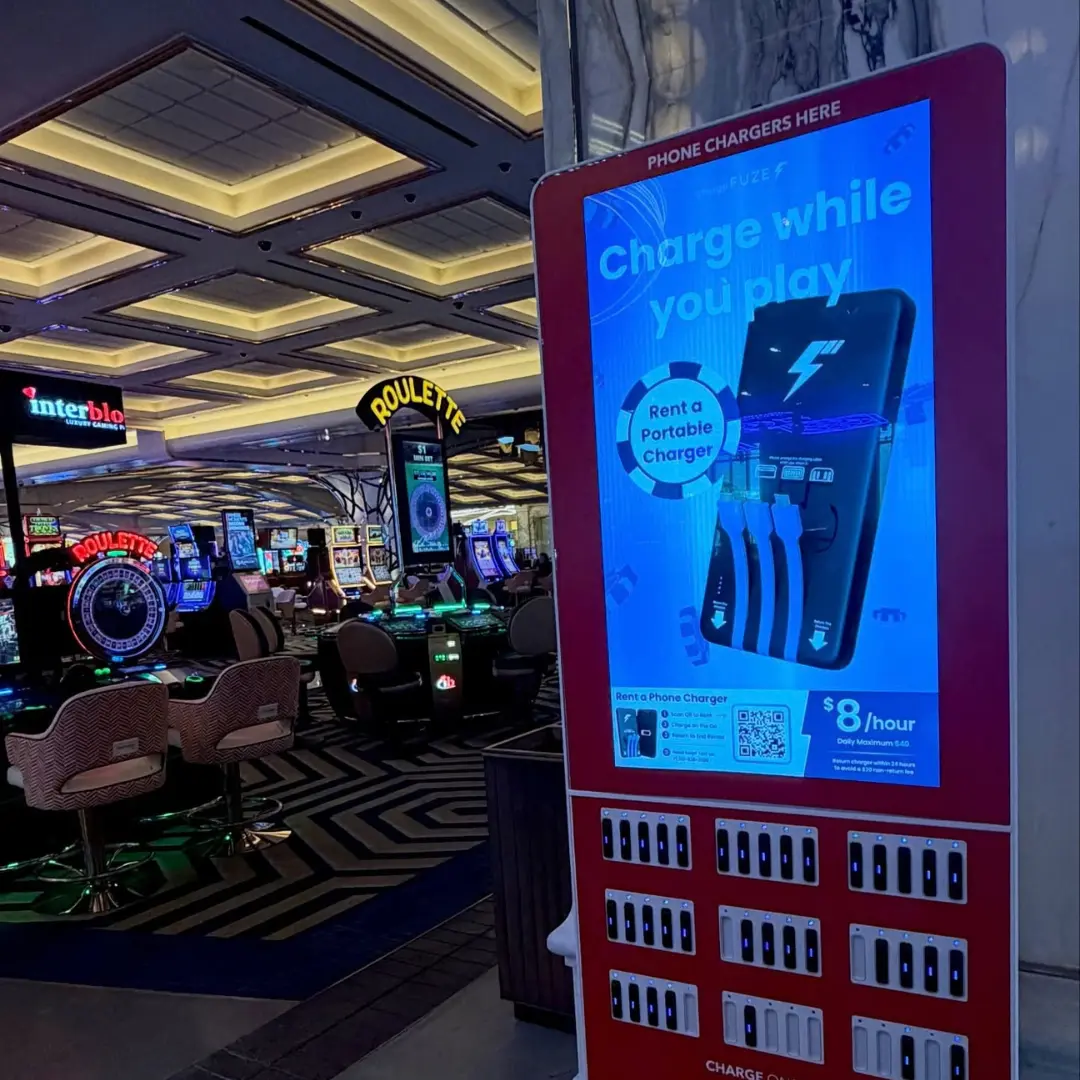
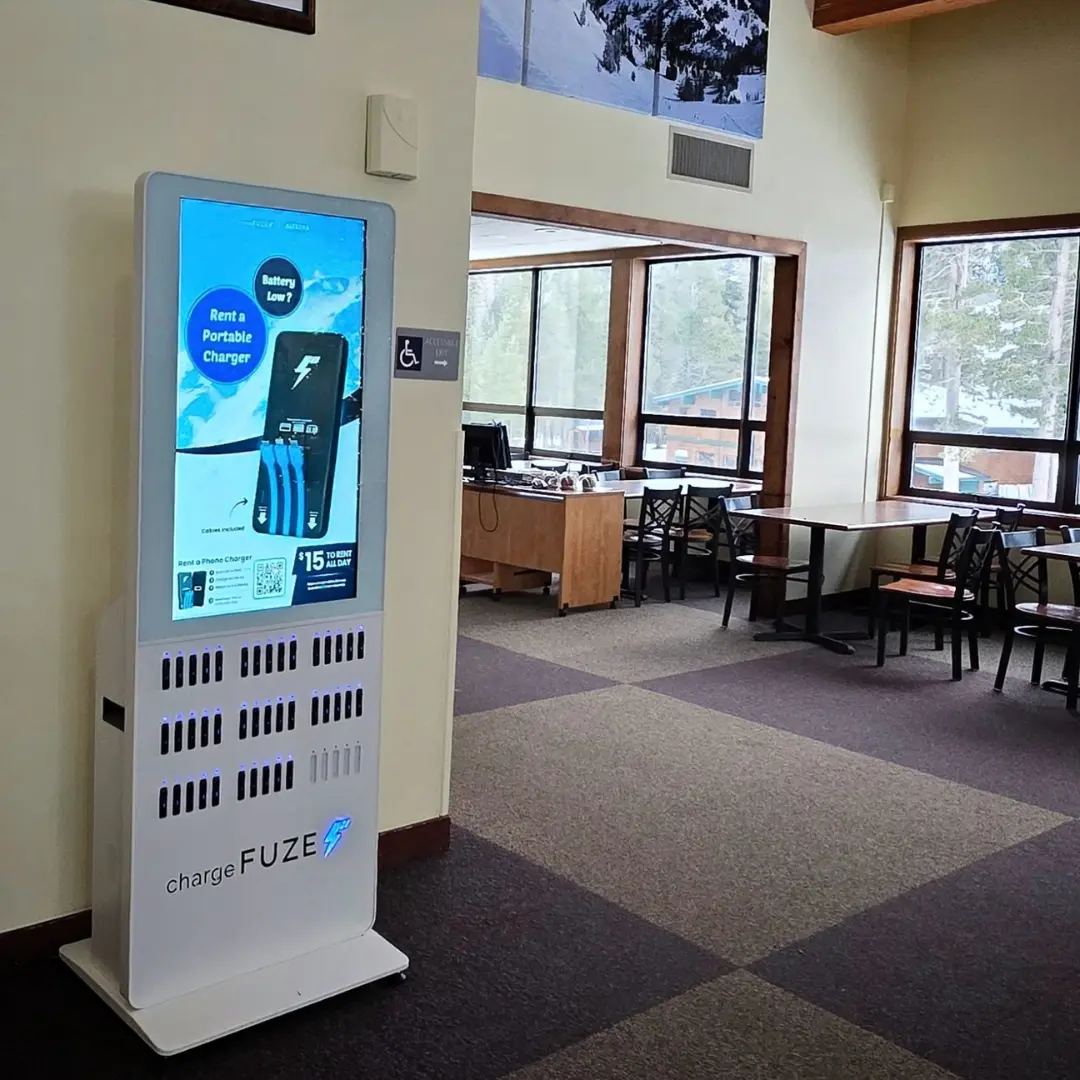
In a paid phone charging kiosk deployment, consumers rent a portable power bank from a self-service station. They scan a QR code or use an app, a charged battery ejects from the kiosk, and they carry it with them while continuing their activities. When finished, they return the power bank to any compatible station in the network. The consumer is billed based on rental duration, typically a few dollars per session.
Revenue Mechanics: Where the Money Actually Comes From
Ad-Supported Revenue
Distributors running free kiosks with digital screens monetize attention. The economics rest on impressions, screen time, and location quality. Programmatic DOOH advertising typically ranges from $2 to $20 CPM (cost per thousand impressions), with venue-based screens in malls, transit hubs, and hospitality settings averaging $7 to $8 CPM. A single kiosk in a high-traffic location generating 5,000 daily impressions at a $7 CPM might produce roughly $35 per day in gross ad revenue, approximately $1,050 per month before platform fees, content management costs, and revenue shares.
It requires consistent foot trafficand screens that are actually watched. The distributor also needs to manage content scheduling, advertiser relationships, and proof-of-play reporting, all of which add operational complexity unrelated to charging phones.
Sponsorship deals can simplify this. A single corporate sponsor funding a fleet of branded kiosks in a defined territory eliminates the need to sell individual ad slots. But sponsorship revenue depends on finding the right brand partner and delivering measurable value. If a sponsor does not renew, the revenue disappears overnight.
Direct Rental Revenue
Distributors running paid kiosks earn from every consumer transaction. Industry pricing typically ranges from $2 to $5 per rental session, with some high-demand locations commanding higher rates. If a kiosk averages 5 rentals per day at $3 each, that yields $15 per day, or roughly $450 per month in gross revenue per unit. At busier locations, 10 to 15 daily rentals push monthly gross to $900–$1,350 per kiosk.
The distributor's take depends on the platform's revenue-share structure. Some networks offer distributors 70% to 80% of rental revenue, with the remaining share covering software licensing, payment processing, customer support, and connectivity. At a gross of $450 per month, a 75% share means $337.50 in distributor revenue per kiosk.
Cost Structure Comparison
Hardware and Deployment
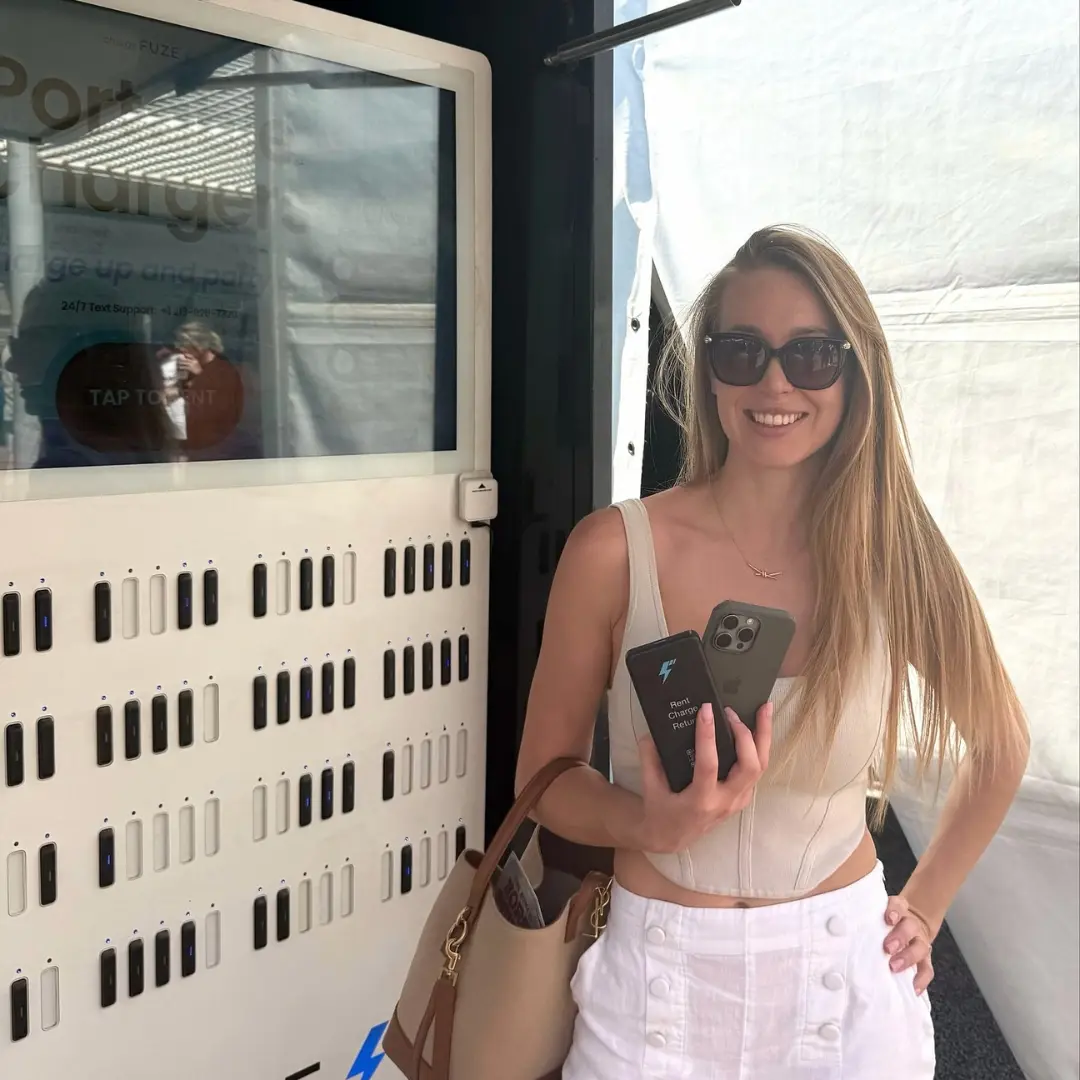
Free-model kiosks with integrated advertising screens tend to cost more upfront. A floor-standing unit with a high-resolution digital display, multiple charging cables, and network connectivity can range from $2,000 to $5,000 or more per unit, depending on screen size and build quality. Paid-model portable power bank stations are generally more compact and less expensive per unit, typically ranging from $800 to $2,500, depending on the number of battery slots and whether the unit includes a screen.
Ongoing Operations
Free kiosks require content management software, which may carry monthly licensing fees of $10 to $200 per screen. They also require someone to create or curate ad content, manage advertiser relationships, and pull performance reports. If screens malfunction, the revenue stream stops regardless of whether the charging function still works.
Paid kiosks have different operational demands. Power banks degrade and go missing. Industry estimates suggest replacement rates of roughly 50% of inventory annually in some markets, depending on consumer behavior and loss-prevention measures. Each lost or damaged unit is a direct hit to the cost line.
Break-Even Timeline
Financial models for paid power bank rental businesses project break-even timelines of approximately 12 to 23 months, depending on scale, location mix, and operational efficiency. Free-model break-even is harder to generalize because it depends on the distributor's ability to sell advertising, which is a skill set that varies enormously and is influenced by local market conditions, competition for ad spend, and the quality of the venue portfolio.
The Venue Pitch: What Makes Each Model an Easier Sell
Selling Free Kiosks to Venues
When you offer a venue a free charging station, you are pitching a zero-cost amenity. The venue pays nothing. Their customers get a useful service. For venues that view charging as a hospitality enhancement rather than a revenue line, this is an easy yes.
Selling Paid Kiosks to Venues
When you offer a venue a paid power bank rental station, you are pitching a revenue-sharing partnership. The venue gets a free installation, a free amenity for customers, and a monthly check. Distributors in the portable charging space report that nine out of ten venues say yes to this pitch because there is zero cost and immediate upside. Network operators like chargeFUZE, which manages everything from hardware maintenance to 24/7 consumer support on behalf of its distributors, make the value proposition even cleaner. The venue simply provides counter or floor space and earns passive revenue.
Some guests may be reluctant to pay for charging, particularly in settings where they expect amenities to be complimentary. However, the portable model offsets this by offering something a free fixed station cannot, which is mobility. Consumers rent a power bank and take it with them, continuing to shop, explore, or socialize without being tethered to a wall outlet. That freedom is a meaningful upgrade over standing by a locker for 30 minutes, and most consumers recognize its value once they experience it.
Scalability: Which Model Grows Faster?
Scaling the Free Model
Scaling a free, ad-supported network requires two things simultaneously: more kiosks in more locations, and more advertisers willing to buy impressions across those locations. This creates a chicken-and-egg problem. Advertisers want reach, but building that base requires capital that is hard to justify without committed advertising revenue. Distributors who crack this tend to do so by securing anchor sponsorships early and then layering programmatic ad revenue on top as the network matures.
Scaling the Paid Model
Each new kiosk is essentially a clone of the last one: the same hardware, the same consumer experience, the same revenue mechanics. The distributor's job is to identify high-traffic venues, deploy units, and optimize placement based on rental data. Platform software handles payments, customer issues, and usage analytics centrally. The critical scaling lever is network density. A denser network of stations means consumers can pick up a power bank at one location and return it at another, thereby increasing perceived value and driving higher adoption. As the network grows, the app becomes more useful, driving more rentals per kiosk and improving unit economics. This network effect does not exist in the free model, where each kiosk is an independent installation with no consumer-facing connection to the rest of the fleet.
Ten Scenarios: Matching the Model to the Market
- Airport terminals and transit hubs. Paid rental wins. Travelers are time-pressed, willing to pay for convenience, and need portable power they can carry to their gate. A fixed charging locker forces them to stay in one spot.
- Bars, nightclubs, and nightlife venues. Paid rental wins. Patrons are mobile, social, and unlikely to stand next to a wall outlet. A portable power bank lets them keep moving, keep ordering, and keep posting. Venue owners benefit from the revenue share and the extended dwell time.
- Shopping malls and retail centers. Paid rental wins slightly. Shoppers want to keep walking, and mall operators can place return stations across multiple floors and anchor stores. The network effect creates a genuine utility layer across the property.
- Hospital waiting rooms and lobbies. Free model wins. Patients and families are already stressed. Charging a fee for power in a healthcare setting creates poor optics. A sponsored or venue-subsidized free station aligns better with the care environment. Many health systems, including chargeFUZE partners operating across multi-campus networks, deploy kiosks as a patient-experience investment.
- Hotels and resorts. Either model works, depending on positioning. Luxury properties may prefer a free amenity funded through their hospitality budget. Mid-tier hotels may appreciate the revenue share from a paid model, especially in lobbies, pools, and conference areas where guests move freely.
- Stadiums and arenas. Paid rental wins. Fans at live events use their phones heavily and are highly motivated to stay charged. Networks that have deployed this model at major events drawing hundreds of thousands of attendees report strong per-kiosk transaction volumes.
- Trade shows and conferences. Free model wins with sponsorship. Exhibitors and event organizers are already looking for sponsorship activations. A branded charging lounge funded by a tech company or financial services firm creates a natural fit — the sponsor gets a captive audience, attendees get free power, and the distributor earns a deployment fee.
- University campuses. Paid rental works well. Students are digitally native, comfortable with app-based services, and constantly on the move between classes, libraries, and dining halls. A dense network of small kiosks across campus creates high utilization and strong word-of-mouth adoption.
- Corporate offices and coworking spaces. Free model wins. Employers provide charging as a workplace perk, similar to free coffee or snacks. There is no consumer willingness to pay in an office setting, but the employer may subsidize the installation, or a distributor can pair it with a small digital signage package.
- Music festivals and outdoor events. Paid rental wins decisively. Attendees are away from outlets for hours or days, phone usage is extreme, and the willingness to pay is high. Festival deployments are often the highest-revenue days in a distributor's calendar, with some operators reporting peak rental volumes many times their daily average.
The Decision Framework: Four Questions Every Distributor Should Answer
- What is your capital situation? If you have limited upfront capital and need revenue flowing quickly, the paid rental model offers a faster path to positive cash flow. Ad-supported models require more patience and often a larger initial deployment to attract meaningful ad revenue.
- What is your operational DNA? If you come from a media, advertising, or signage background, you may have the relationships and skills to make the free model work at scale. If you are more operationally oriented, the paid model aligns more naturally.
- What does your local market look like? High-density urban markets with strong nightlife, tourism, and event scenes tend to favor paid rental models because consumer traffic and willingness to pay are both high. Markets dominated by corporate campuses, healthcare systems, or government buildings may lean toward the free model because the end-use environments are less transactional.
- How do you want to spend your time? In the free model, a significant portion of your effort goes toward selling and managing advertising or sponsorships. In the paid model, your effort goes toward venue acquisition, kiosk placement optimization, and network expansion. Both require hustle, but they demand very different kinds of hustle.
The charging kiosk market is growing fast enough to support multiple approaches. But for distributors looking to build a scalable business, the paid rental model offers a more predictable revenue stream, simpler operations, and stronger network effects as you grow. Pair it with strategic free placements in the right venues, and you build a portfolio that is both profitable and resilient.
Sources
- Global Growth Insights – Cell Phone Charging Station Market Report (2024–2033)
- Verified Market Reports – Shared Power Bank Rental Service Market (2024–2033)
- Business Research Insights – Shared Power Bank Market Size and Trends (2025–2034)
- Coherent Market Insights – Shared Power Bank Market Size, Share and Analysis (2025–2032)
- StackAdapt – DOOH Advertising Costs: Making the Case for Budget (2024)
