
Text +1 (213) 928-7320
Let's chat!

EV vs. Phone Charging Stations: What Commercial Buyers Need to Know
Electric vehicle charging and mobile device charging are each growing rapidly. They share overlapping venue types, hotels, airports, retail centers, and hospitals, and vendors on both sides market aggressively to the same property managers and operations teams. But the similarities end at the word "charging." The infrastructure demands, cost structures, revenue models, installation timelines, and strategic rationale for each category differ fundamentally. This post breaks down those differences. Whether you are evaluating one category or both, the goal is to help you understand exactly what each investment involves so you can match the right charging solution to your property, your customers, and your budget.
Why the Search Results Are So Confusing
A facilities manager at a hospital system exploring amenity upgrades might search for "commercial charging stations" without specifying the type, only to be pulled into EV infrastructure rabbit holes when their actual need is to keep patients' and visitors' phones charged. Conversely, a retail developer evaluating EV readiness for a new shopping center might wade through results from phone-charging kiosks before finding the electrical engineering guidance they need. Understanding that these are two separate markets with different supply chains and ROI models is the first step toward making a smart purchasing decision.
The EV Charging Landscape: Scale, Cost, and Complexity
Electric vehicle charging infrastructure operates at an industrial scale. Even the most basic commercial EV charger delivers 7 to 19 kilowatts of power. That is roughly the same electrical load as running several residential central air conditioning units. DC fast chargers, the kind you see at highway travel plazas and busy urban hubs, can push 150 to 350 kilowatts, with some next-generation units reaching 500 kW or beyond.
This power demand creates infrastructure requirements that go far beyond plugging something into a wall outlet. A commercial EV charging project typically begins with a comprehensive site assessment: electricians and engineers evaluate the building's existing electrical capacity, transformer size, panel space, and demand charges. Average infrastructure modification expenses range from $5,000 to $25,000 per charging location, with electrical system upgrades spanning $10,000 to $40,000, depending on the complexity of the existing infrastructure.
The hardware itself adds additional cost. A Level 2 commercial port typically runs $3,000 to $12,000 installed, depending on power level and site conditions. DC fast charging is a different financial league entirely: realistic budgets range from $80,000 to $250,000 or more per site for the charger hardware, installation, trenching, signage, networking, and sometimes a new utility transformer.
Permitting adds another layer. Most jurisdictions require electrical permits, and some require zoning or building permits for the associated construction. OCPP-compliant (Open Charge Point Protocol) networking software is increasingly expected by commercial operators, adding ongoing subscription costs but enabling remote management, payment processing, and usage analytics.
The Market Behind the Investment
The scale of investment reflects the scale of the opportunity. The global EV charging station market was valued at approximately $18.16 billion in 2025 and is projected to reach $139.93 billion by 2034, growing at a compound annual rate of 25.37 percent. In the United States alone, 6.5 million EVs were on the road as of mid-2025, with EV registrations making up roughly 9.5 percent of new light-duty vehicle sales, according to data from the Alliance for Automotive Innovation.
The infrastructure race to keep up with adoption is well underway. Public EV charger availability grew 12 percent year-over-year through mid-2025, but the ratio of new EVs to new public ports remained steep at roughly 41 new vehicles for every new public charging port added. This gap represents both a market need and a competitive advantage for early movers.
The Phone Charging Landscape: Accessibility, Simplicity, and Customer Experience
The business case for phone charging is about behavior. 70 percent of users feel anxious once their battery drops below 20 percent, with Gen Z users beginning to worry at 44 percent battery life and checking for chargers before they even reach critical levels. This anxiety directly affects where consumers choose to spend time and money. For venues where dwell time drives revenue, a phone charging station converts a commodity amenity into a measurable business asset.
The cell phone charging station market reflects this demand. Valued at approximately $507 million in 2024, the market is projected to grow to $1.8 billion by 2033 at a compound annual growth rate of 15.11 percent. Charging stations are now present in over 60 percent of major transportation hubs and 55 percent of shopping centers globally.
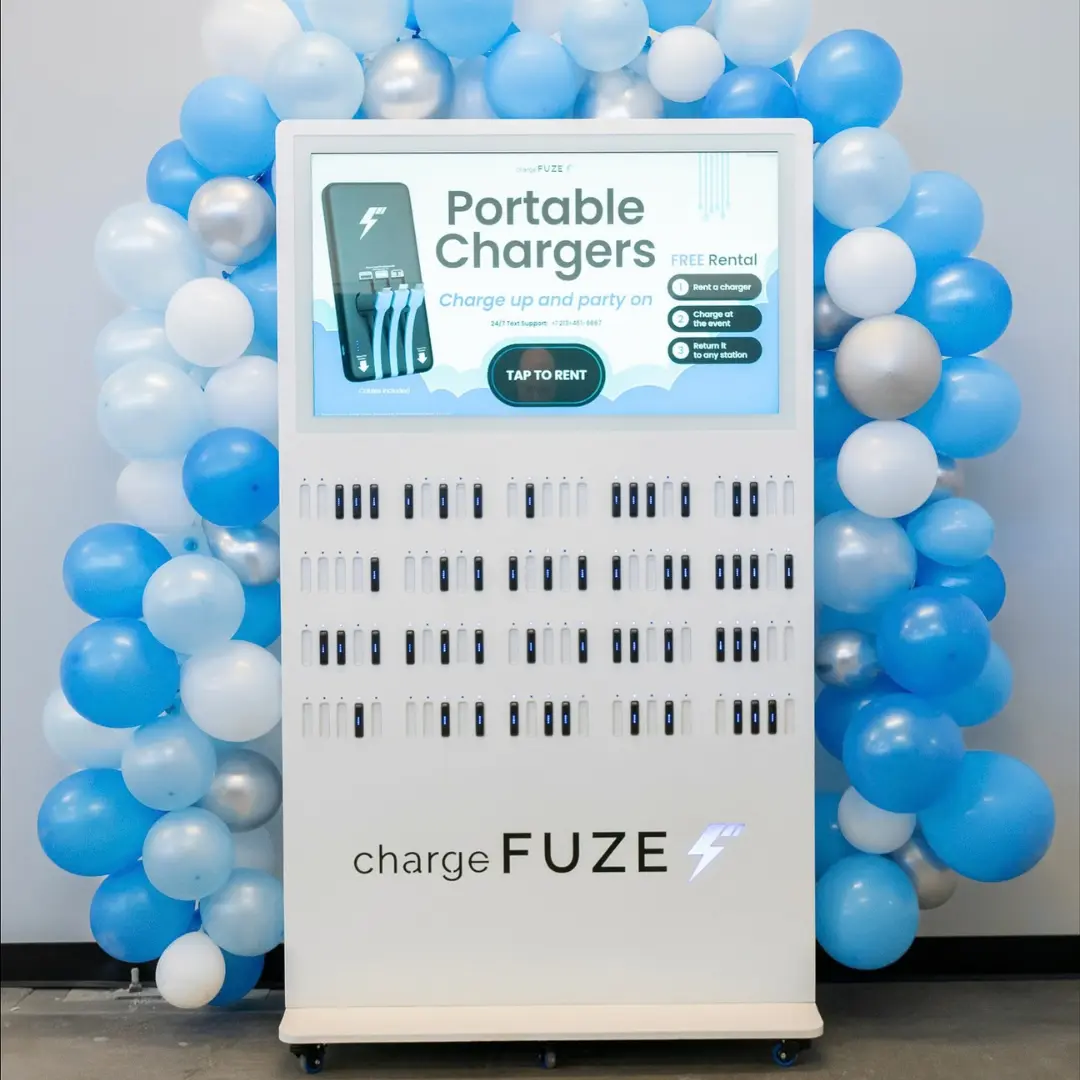
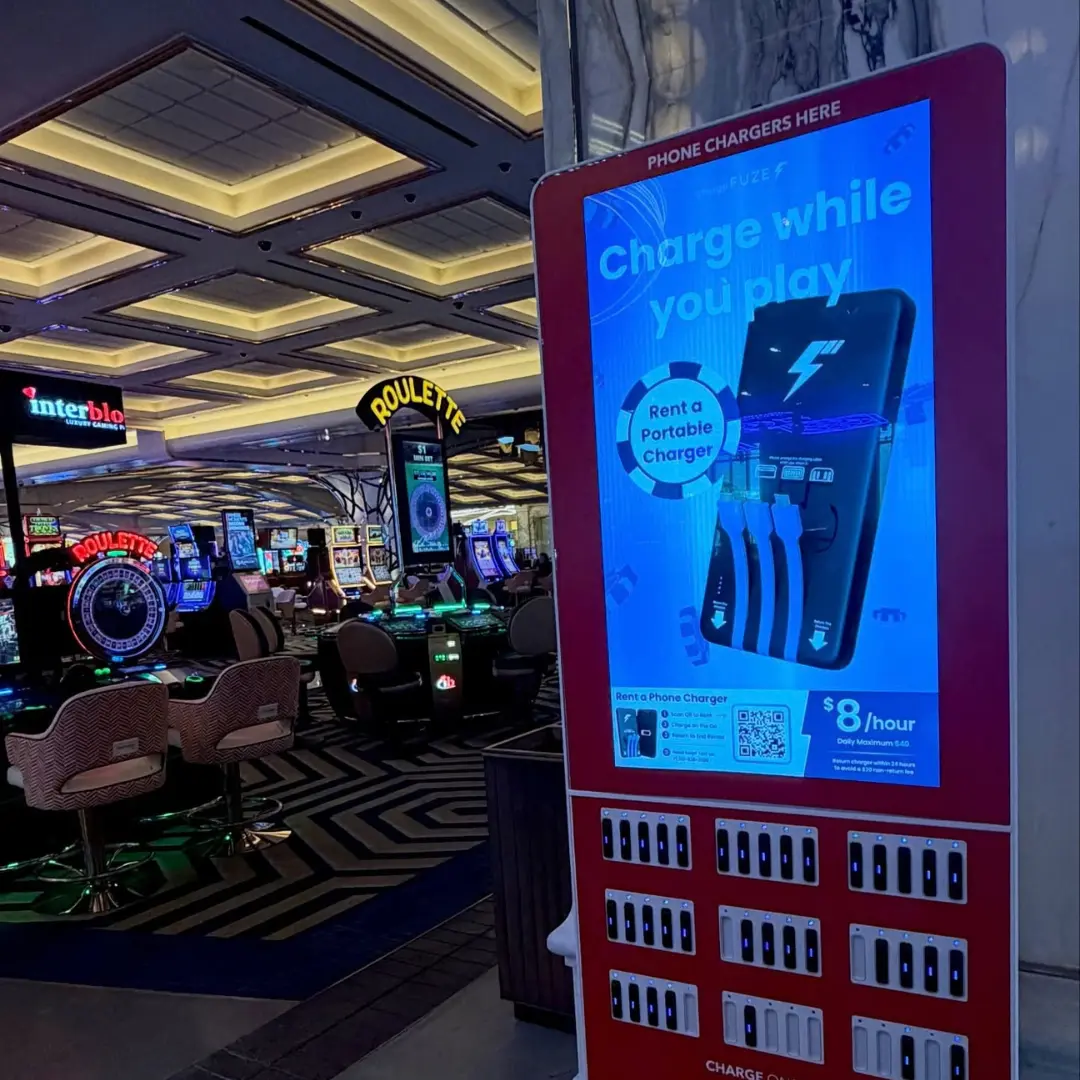
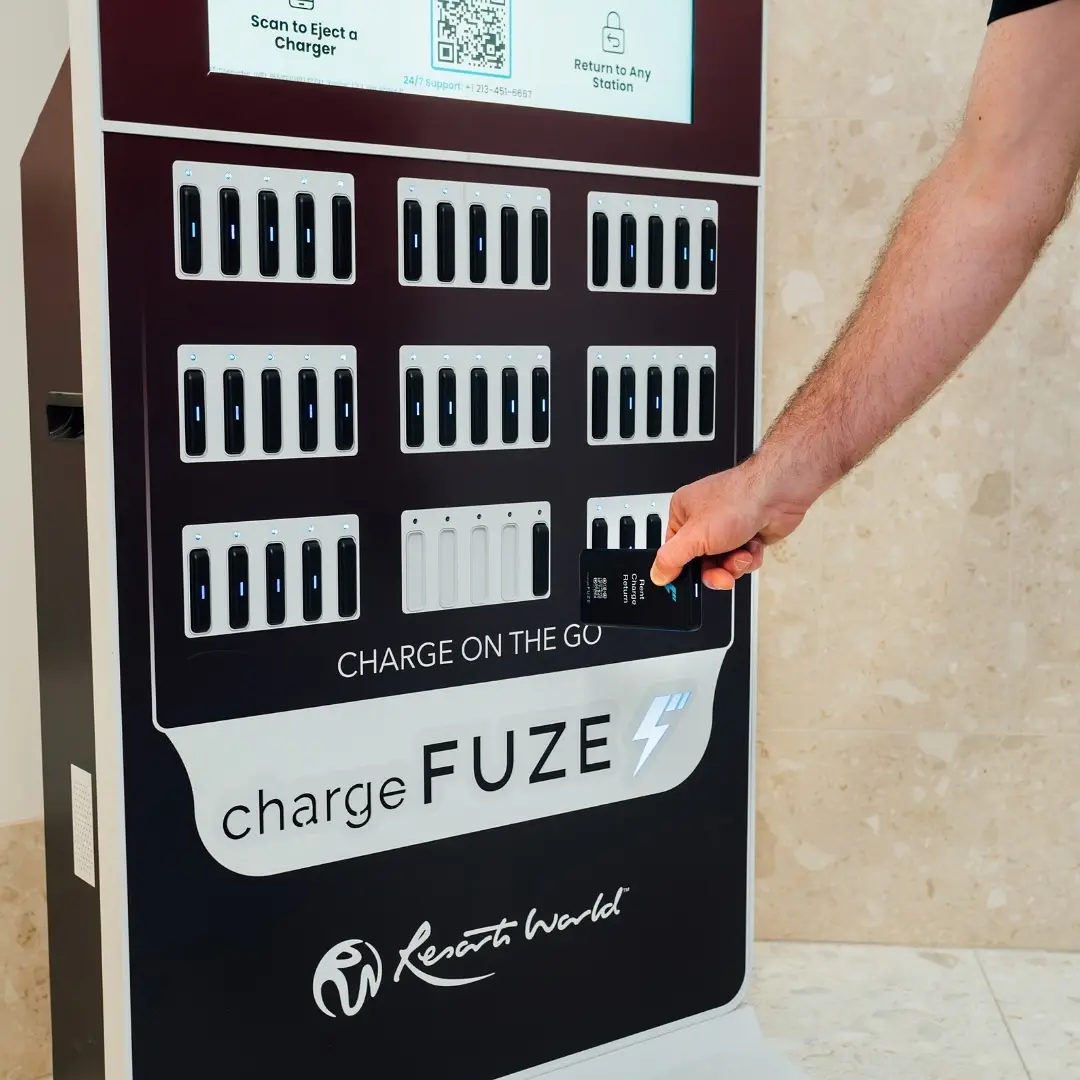
Unlike EV charging, phone charging deployments are genuinely plug-and-play. Wall-mounted units work for venues with limited floor space. Freestanding kiosks suit high-traffic lobbies and concourses. Portable power bank rental stations, like those offered by ChargeFUZE, give users the freedom to grab a charged battery pack from a kiosk and return it at any location in the network, eliminating the need for customers to stand next to a wall for thirty minutes while their phone charges. This rental model has gained traction in bars, arenas, hospitals, and campuses where customers are on the move and cannot be tethered to a fixed charging point.
Cost Comparison: What Each Investment Actually Looks Like
Putting the two categories side by side makes the financial gap immediately clear.
EV Charging (per site):
- Level 2 hardware and installation: $3,000 to $15,000 per port
- DC fast charging hardware and installation: $80,000 to $250,000+
- Electrical infrastructure upgrades: $5,000 to $40,000
- Ongoing networking and software: $50 to $300+ per month per port
- Typical timeline from decision to deployment: 3 to 12 months
Phone Charging (per unit):
- Basic multi-cable station: $200 to $1,500
- Smart kiosk with screen and payment: $1,500 to $5,000
- Power bank rental station: varies by provider and model
- Electrical infrastructure upgrades: typically none
- Typical timeline from decision to deployment: days to weeks
This is not an apples-to-apples comparison, and it is not meant to suggest one is "better" than the other. These are fundamentally different capital expenditures solving different problems. EV charging is an infrastructure play, a long-horizon investment in property value and transportation trends. Phone charging is an amenity-and-experience play, with a near-term investment in customer satisfaction and brand perception.
Revenue Models: How Each Category Pays For Itself
The path to ROI differs sharply between the two categories, and understanding those differences is critical for setting realistic financial expectations.
EV Charging Revenue
EV charging revenue comes primarily from energy sales. In the United States, Level 2 public charging typically costs around $0.20 to $0.25 per kilowatt-hour or $2 to $5 per hour of charging time. DC fast charging commands a premium at $0.40 to $0.60 per kilowatt-hour. A well-placed, well-managed station can generate $5,000 to $40,000, or more, in annual profit, depending on scale, location, and utilization rates.
Level 2 deployments typically break even in three to five years. DC fast chargers, with their far higher upfront costs, often require five to ten years to reach payback, unless accelerated by government incentives. The federal 30C Alternative Fuel Vehicle Refueling Property Credit currently offers up to 30 percent of installation costs (capped at $100,000 per unit) for qualifying projects that meet prevailing wage and apprenticeship requirements and are located in eligible census tracts. However, this credit is set to expire on June 30, 2026, compressing the window for businesses to capture that subsidy.
Phone Charging Revenue
Phone charging revenue follows a different model entirely. Some businesses offer charging as a free amenity, like a cost-of-doing-business investment in customer satisfaction, similar to offering free Wi-Fi. Others monetize through per-session fees, typically a few dollars per charge, or through power bank rental subscriptions.
Phone charging stations with integrated digital screens create advertising inventory with rotating promotions and event-specific messaging that can be updated remotely in real time. Some providers also offer data collection capabilities, such as brief survey prompts or opt-in feedback, that create a measurable customer engagement channel. The ROI math for phone charging is less about energy margin and more about the incremental revenue from longer dwell times, higher conversion rates, repeat visits, and advertising monetization. Because the upfront cost is low, payback is often measured in weeks or months rather than years.
Regulatory and Incentive Differences
EV charging sits at the intersection of energy policy, building codes, zoning law, and federal tax policy. The 30C tax credit alone requires navigating census-tract eligibility, prevailing-wage compliance, and IRS reporting requirements. Many states layer additional incentives, rebates, and utility programs on top. The National Electric Vehicle Infrastructure (NEVI) Formula Program, funded through the Bipartisan Infrastructure Law, has channeled billions of federal dollars toward EV charging buildout.
ADA compliance requirements apply to EV charging installations, dictating minimum clearances, accessible route design, and signage. Fire code considerations govern the placement of high-power electrical equipment. Utility coordination is often required for load management and demand response integration.
Phone charging stations, by contrast, fall into the same regulatory category as most consumer electronics. No special permits, utility coordination, or federal incentive programs. ADA considerations apply to physical placement but not to the electrical system. The barrier to entry is functionally zero from a regulatory standpoint.
Choosing the Right Investment for Your Property
When EV Charging Makes Sense
EV charging aligns best with properties where vehicles park for extended periods and where the customer base includes current or near-future EV owners. Think office parks, hotels, multifamily residential buildings, retail centers with grocery anchors, airports, and medical campuses. Properties in California, Colorado, Washington, and other high-EV-adoption states will see faster utilization. The investment horizon is long, but the strategic positioning is significant: as EV penetration continues climbing past the current 9.5 percent of new sales, properties without charging risk become less competitive. The 30C tax credit creates urgency for anyone considering the investment. With its June 2026 expiration, projects that begin now can still capture up to 30 percent of costs, potentially cutting years off the payback timeline.
When Phone Charging Makes Sense
Phone charging aligns with any venue where customer experience, dwell time, and engagement drive revenue. Bars, restaurants, event venues, hospitals, university campuses, coworking spaces, salons, and entertainment complexes all fit the profile. The investment is small, the deployment is fast, and the impact on customer satisfaction is immediate. For high-traffic venues where people are on the move, portable power bank rental networks offer a particularly strong fit because they do not require customers to stay in one spot while charging. This model converts a pain point into a seamless, branded experience.
The commercial charging station market is not one market. It is two markets sharing a name, and the failure to distinguish between them leads to wasted research time and budget assumptions that are off by orders of magnitude. EV charging is an infrastructure investment. It demands engineering, significant capital, regulatory navigation, and patience, but it positions a property at the front of a $140-billion global market and meets a transportation need that is growing 25 percent annually. Phone charging is an investment in the customer experience. It requires minimal capital and no infrastructure changes, yet it taps into a universal consumer need, delivering measurable gains in foot traffic, dwell time, and brand loyalty. The right answer depends on your property, your customers, and your goals. But the first step is the same for every commercial buyer: know which market you are actually shopping in.
Sources:
- Fortune Business Insights — Electric Vehicle Charging Stations Market Size, Forecast 2034
- Alliance for Automotive Innovation — Get Connected EV Report Q2 2025
- U.S. Department of Energy, Alternative Fuels Data Center — Tax Credits for EVs and Charging Infrastructure
- Kiplinger — The Federal EV Charger Tax Credit: What to Know for 2025 and 2026
- Global Growth Insights — Cell Phone Charging Station Market Size & Forecast 2033
- CBRE — How Leasing EV Charging Infrastructure Can Improve Asset Value
- Solid Studio — EV Charging Station Profit Margin 2025
- ContextSDK — Understanding Low-Battery Anxiety and Its Impact on User Behavior
- Study Finds — Average Person Starts to Panic When Phone Battery Drops to 38%
- S&P Global — EV Adoption Rates: How the US and Other Markets Compare in 2025
- Paren — US EV Fast Charging Q2 2025 Report
- ChargeFUZE — The Leading Mobile Phone Charging Network
